
How Hot Is Too Hot for a Gearbox?
An agricultural gearbox running at normal operating temperature will be warm to the touch — roughly 50–70°C — and this is completely normal. A gearbox running hot enough that you cannot hold your hand against the housing for more than two or three seconds has exceeded approximately 70°C and is approaching the thermal limit of most gear oils. A housing that is too hot to touch at all indicates a temperature of 80°C or above — a condition that is actively degrading oil, accelerating bearing wear, and shortening gearbox life with every minute of continued operation.
Gearbox overheating has a limited number of root causes, and each produces a recognizable pattern of symptoms. Working through them in order finds the problem faster than replacing parts at random.
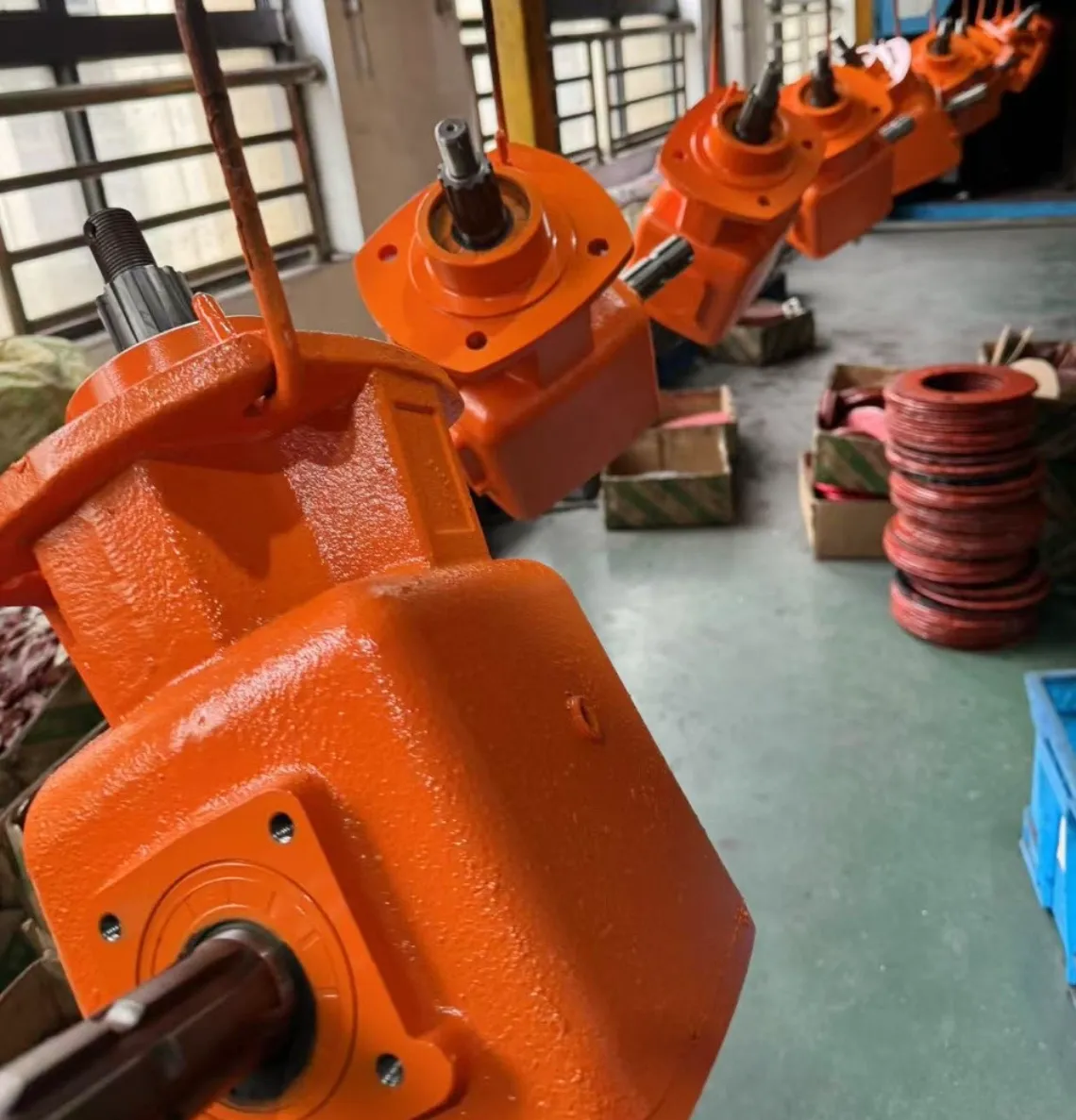
Cause 1 — Low Oil Level
Low oil is the most common cause of gearbox overheating and the first thing to check. Oil serves two roles simultaneously: lubricating gear tooth and bearing contact surfaces, and transferring heat away from those surfaces to the housing walls where it dissipates into the surrounding air. When oil level drops below the minimum, both functions are compromised. Heat generated by gear mesh and bearing contact accumulates faster than the reduced oil volume can carry it away, producing a rapid temperature rise even at normal load conditions.
Check oil level with the gearbox in its normal operating orientation and the implement stationary. Remove the level plug — on most agricultural gearboxes this is the highest threaded plug on the housing. Oil should be visible at the bottom of the plug hole. If the level is low, add the correct oil grade until it flows from the plug hole, then recheck for leaks that may have caused the level loss. A gearbox that regularly loses oil has a seal or plug leak that must be addressed, not just topped up repeatedly.
Cause 2 — Wrong Oil Viscosity or Grade
Oil viscosity that is too low for the operating temperature fails to maintain an adequate lubricating film between gear tooth flanks and bearing races, allowing metal-to-metal contact and friction-generated heat. Oil that is too thick for cold start conditions creates excessive churning losses as gears and bearings drag through the oil — this generates heat even before load is applied. Both conditions produce elevated operating temperature, but through opposite mechanisms.
Correct viscosity by gearbox type and climate
Bevel and helical gearboxes in agricultural implements typically specify SAE 80W-90 or 85W-140 GL-5 gear oil. In tropical or high-summer-temperature climates where ambient temperatures regularly exceed 35°C, the higher-viscosity 85W-140 provides better film thickness at operating temperature. Worm gearboxes require dedicated worm gear oil — commonly ISO VG 220 (cooler climates) or ISO VG 460 (hot climates) — because their sliding contact mechanics generate more heat than rolling-contact gear designs and require oils with stronger film-forming additives. Using standard GL-5 gear oil in a worm gearbox is a direct cause of overheating and accelerated worm wheel wear.
Cause 3 — Implement Running Beyond Rated Duty Cycle
Every agricultural implement gearbox has a rated duty cycle — the percentage of operating time at full load the gearbox is designed to sustain before requiring a cooling interval. A rotary cutter gearbox rated for continuous operation at full PTO power can run indefinitely at that load. A gearbox rated for intermittent operation — such as a fertilizer spreader drive designed for short spreading passes with travel intervals — will overheat if operated continuously at full load beyond its rated cycle.
Check the implement manual for any duty cycle or continuous-use restrictions. If the gearbox overheating began when operating patterns changed — longer continuous passes, higher throughput rates, or a more powerful tractor than the implement was originally specified for — duty cycle exceedance is the likely cause. The fix is to either reduce the operating intensity (slower ground speed, smaller working width, more frequent breaks) or upgrade to a gearbox with a higher continuous duty rating.
Cause 4 — Blocked or Restricted Ventilation
Gearbox housings dissipate heat through their outer surface area. Any obstruction that reduces airflow over the housing — accumulated crop debris, mud, dust-packed fins, or an implement guard panel that traps heat against the housing — reduces cooling effectiveness. In some cases, a layer of dried crop material as thin as 10–15 mm can reduce heat dissipation sufficiently to push an already marginal gearbox into the overheating range during a long field pass.
Clean all housing surfaces, cooling fins, and air channels before the start of each operating season and after any session in conditions producing heavy debris buildup. This is particularly important for gearboxes enclosed within implement decks or guarding panels — reach inside the deck with a brush or compressed air to clear accumulated material from housing surfaces.
Cause 5 — Bearing Failure or Excessive Preload
Worn, damaged, or incorrectly preloaded bearings generate friction heat in addition to the heat produced by gear mesh. A bearing that has lost its lubricant film, developed pitting on the race or rolling elements, or is running with inadequate internal clearance (excessive preload from over-tightening during reassembly) will run hot independently of any load on the gearbox. This bearing-generated heat adds directly to the gear mesh heat, pushing the total above the safe operating range.
Identifying which bearing is overheating
Touch the housing surface near each shaft bearing location after a brief operating run at light load — a bearing running significantly hotter than the rest of the housing surface is failing. Infrared thermometers allow precise comparison between bearing locations without contact risk near rotating parts. If a bearing location is visibly hotter than the others, that shaft must be removed and the bearing inspected. A bearing that shows bluish discoloration on the outer race or rolling elements has experienced overheating sufficient to alter the metal’s temper — it must be replaced even if it appears otherwise intact.
| Symptom Pattern | Most Likely Cause | First Action |
|---|---|---|
| Hot from startup, before reaching full load | Wrong oil viscosity (too thick) or bearing preload | Check oil grade; feel for localized hot spots |
| Heats gradually, stabilizes too high | Low oil level or incorrect viscosity | Check and top up oil level first |
| Normal in winter, overheats in summer | Oil viscosity too low for ambient temperature | Upgrade to higher-viscosity summer grade |
| Only overheats on long continuous passes | Duty cycle exceeded; ventilation blocked | Clean housing; add cooling intervals |
| Localized hot spot near one shaft | Bearing failure at that location | Stop; inspect and replace bearing |
Cause 6 — Oil Contaminated or Degraded
Oil that has been in service beyond its change interval, has become contaminated with water, or has been sheared by sustained high-load operation loses its film-forming and heat-transfer properties. Degraded oil effectively has a lower viscosity at operating temperature than its nominal grade — producing the same overheating pattern as running the wrong grade from the start. If the oil change interval has been exceeded or the oil appears dark, milky, or metallic, replace it regardless of how recently the other causes were investigated. Fresh, correct-grade oil has resolved many overheating problems that appeared to require gearbox replacement.
Need a Replacement Agricultural Gearbox?
When overheating has caused internal damage beyond economical repair, PRR Tractor Part stocks bevel, worm, and right-angle gearboxes for common implement types. Provide your implement model and gearbox ratio for a matched replacement.
Pertanyaan yang Sering Diajukan
Gearbox Running Too Hot? We Can Help.
Our parts team identifies replacement gearboxes by implement type, ratio, and shaft configuration — with fast turnaround for common agricultural applications.
PRR Tractor Part Limited Partnership | [email protected]
304/1170 Soi Phahonyothin 49/1, Intersection 6, Talat Bang Khen Subdistrict, Lak Si District