
Why Correct Sprocket Measurement Matters
Ordering the wrong sprocket is one of the most common and avoidable maintenance mistakes in agricultural equipment. A sprocket with the correct tooth count but wrong pitch will not accept the chain. A sprocket with the correct pitch but wrong bore diameter will not fit the shaft. A sprocket of the right size but wrong tooth profile will wear the chain at an accelerated rate. All three mismatches are preventable with three simple measurements taken before placing any replacement order.
This guide covers every dimension needed to correctly identify and replace a roller chain sprocket on agricultural machinery, including how to measure worn sprockets accurately and how to identify the chain pitch that goes with them.
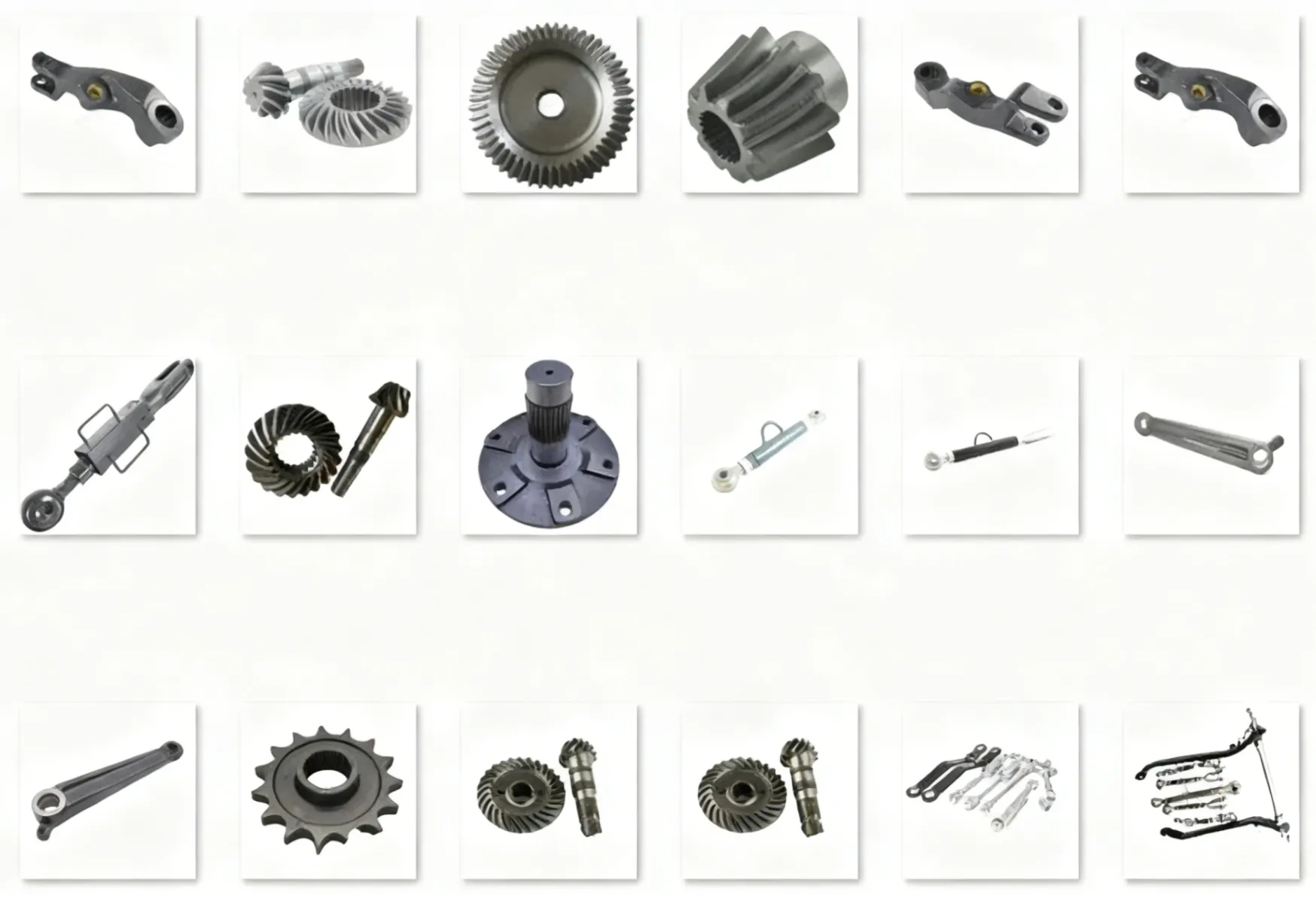
Measurement 1 — Chain Pitch
Pitch is the most important sprocket dimension — it must match the chain exactly. Chain pitch is defined as the center-to-center distance between adjacent roller pins in the chain. Standard roller chain pitches follow the ANSI (American National Standards Institute) or ISO 606 numbering system, with common agricultural sizes including #40 (1/2 inch pitch), #50 (5/8 inch pitch), #60 (3/4 inch pitch), and #80 (1 inch pitch).
How to measure chain pitch directly
Lay a section of the existing chain flat and measure across a span of exactly 10 pitches (11 pins) with a digital caliper. Divide the total measurement by 10. This multi-pitch averaging method accounts for pin wear and gives a more accurate pitch reading than measuring a single pitch interval. Compare the result to standard pitch values: 12.7 mm = #40; 15.875 mm = #50; 19.05 mm = #60; 25.4 mm = #80. If the chain has been removed, measure across the sprocket tooth-to-tooth pitch by placing the caliper across opposite tooth tips and consulting a pitch-to-tip-diameter reference table.
Decoding ANSI chain numbers
ANSI chain numbers encode the pitch directly: divide the chain number by 8 to obtain the pitch in eighths of an inch. Chain #40: 40 ÷ 8 = 5 eighths = 5/8 inch — wait, that would be #50. Correctly: chain #40: pitch = 40/8 = 5/8 inch? No — standard: #40 = 4/8 = 1/2 inch pitch. The number equals the pitch numerator in eighths. Chain #50 = 5/8 inch; #60 = 6/8 = 3/4 inch; #80 = 8/8 = 1 inch. A suffix “H” indicates heavy series (thicker plates); a “-2” or “-3” suffix indicates duplex or triplex strand.
Measurement 2 — Tooth Count
Count the teeth around the full circumference of the sprocket. This sounds obvious but is a common source of error — particularly on sprockets with 30 or more teeth where it is easy to lose count. Use a marker or piece of tape to mark your starting tooth and count in one direction around the full circumference. On worn sprockets, teeth may be partially obscured by debris — clean the sprocket thoroughly before counting.
Tooth count and drive ratio
The tooth count determines the speed ratio between the driving and driven shafts. If the driving sprocket has 15 teeth and the driven sprocket has 45 teeth, the ratio is 3:1 — the driven shaft turns at one-third the driving shaft speed. Replacing a sprocket with a different tooth count changes the implement operating speed. This is occasionally intentional (fine-tuning seed rate on a drill, for example) but is usually an error. Always verify tooth count matches the original unless you are deliberately changing a ratio.
| ANSI Number | Melempar | Roller Width | Roller Dia. | Common Agricultural Use |
|---|---|---|---|---|
| #40 | 1/2 in (12.7 mm) | 5/16 in | 0.312 in | Seed drills, light conveyors |
| #50 | 5/8 in (15.875 mm) | 3/8 in | 0.400 in | Planters, spreaders, auger drives |
| #60 | 3/4 in (19.05 mm) | 1/2 in | 0.469 in | Balers, combine head drives |
| #80 | 1 in (25.4 mm) | 5/8 in | 0.625 in | Heavy conveyors, large balers |
ISO chain standards use metric pitches (8B = 1/2 in, 10B = 5/8 in, 12B = 3/4 in) — confirm which standard applies before ordering.
Measurement 3 — Bore Diameter and Keyway
The bore diameter must match the shaft diameter the sprocket mounts on. Measure the existing bore with a digital caliper across the internal diameter at two perpendicular orientations — worn bores may be slightly oval from shaft slip and should be measured at both orientations to confirm actual bore condition. Note whether a keyway is present and its dimensions (width and depth), as sprockets are available in plain bore, keyed bore, and taper lock hub configurations.
Taper lock vs plain bore sprockets
Taper lock (or taper bush) sprockets use a split tapered insert that compresses against the shaft when tightened, eliminating keyways and allowing the sprocket to be positioned anywhere along the shaft. They are common on adjustment-heavy drives like baler pickup speed control. Plain bore sprockets with a keyway and set screw are simpler and appropriate for fixed-position shaft drives. Specify the correct hub configuration when ordering — the same tooth count and pitch is available in both styles and they are not interchangeable.

How to Identify Worn Chain and Whether to Replace Together
A new sprocket fitted to a worn chain will wear at an accelerated rate because the elongated chain links contact only the tips of the sprocket teeth rather than seating fully into the tooth profile. Industry practice recommends replacing chain and sprocket together whenever chain elongation exceeds 1–2% (measured as actual length versus nominal length over a 10-link span). Measure 10 links of the existing chain: multiply the nominal pitch by 10 and compare. If actual length exceeds nominal by more than 1.5%, replace both components simultaneously.
Browse our complete range of agricultural sprockets and matched chain sets, sized by ANSI number and tooth count for the most common implement applications.
Need a Replacement Sprocket Matched to Your Chain?
PRR Tractor Part stocks ANSI #40 through #80 sprockets in a range of tooth counts and bore configurations for major implement brands.
Pertanyaan yang Sering Diajukan
Get the Right Sprocket for Your Drive System
Our team matches sprockets to your chain pitch, tooth count, bore, and hub configuration — fast and accurate.
PRR Tractor Part Limited Partnership | [email protected]
304/1170 Soi Phahonyothin 49/1, Intersection 6, Talat Bang Khen Subdistrict, Lak Si District