
Description du produit
Description du produit
Paramètres du produit
| Paramètres | Unit | Level | Taux de réduction | Flange Size Specification | |||||
| 070 | 090 | 115 | 155 | 205 | 235 | ||||
| Rated output torque T2n | N.m | 1 | 3 | 55 | 130 | 208 | 342 | 588 | 1140 |
| 4 | 50 | 140 | 290 | 542 | 1050 | 1700 | |||
| 5 | 60 | 160 | 330 | 650 | 1200 | 2000 | |||
| 7 | 35 | 140 | 300 | 550 | 1100 | 1800 | |||
| 8 | 35 | 120 | 260 | 500 | 1000 | 1600 | |||
| 10 | 23 | 48 | 140 | 370 | 520 | 1220 | |||
| 2 | 12 | 55 | 130 | 208 | 342 | 588 | 1140 | ||
| 15 | 55 | 130 | 208 | 342 | 588 | 1140 | |||
| 20 | 50 | 140 | 290 | 542 | 1050 | 1700 | |||
| 25 | 60 | 160 | 330 | 650 | 1200 | 2000 | |||
| 28 | 60 | 160 | 330 | 650 | 1200 | 2000 | |||
| 30 | 60 | 160 | 330 | 650 | 1200 | 2000 | |||
| 35 | 60 | 160 | 330 | 650 | 1200 | 2000 | |||
| 40 | 60 | 160 | 330 | 650 | 1200 | 2000 | |||
| 50 | 60 | 160 | 330 | 650 | 1200 | 2000 | |||
| 70 | 35 | 140 | 310 | 550 | 1100 | 1800 | |||
| 100 | 23 | 48 | 140 | 370 | 520 | 1220 | |||
| 3 | 120 | 60 | 160 | 330 | 650 | 1200 | 2000 | ||
| 150 | 60 | 160 | 330 | 650 | 1200 | 2000 | |||
| 200 | 60 | 160 | 330 | 650 | 1200 | 2000 | |||
| 250 | 60 | 160 | 330 | 650 | 1200 | 2000 | |||
| 280 | 60 | 160 | 330 | 650 | 1200 | 2000 | |||
| 350 | 60 | 160 | 330 | 650 | 1200 | 2000 | |||
| 400 | 60 | 160 | 330 | 650 | 1200 | 2000 | |||
| 500 | 60 | 160 | 330 | 650 | 1200 | 2000 | |||
| 700 | 35 | 140 | 310 | 550 | 1100 | 1800 | |||
| 1000 | 23 | 48 | 140 | 370 | 520 | 1220 | |||
| Maximum output torque T2b | N.m | 1,2,3 | 3~1000 | 3Times of Rated Output Torque | |||||
| Rated input speed N1n | rpm | 1,2,3 | 3~1000 | 5000 | 3000 | 3000 | 3000 | 3000 | 2000 |
| Maximum input speed N1b | rpm | 1,2,3 | 3~1000 | 10000 | 6000 | 6000 | 6000 | 6000 | 4000 |
| Ultra Precision Backlash PS | arcmin | 1 | 3~10 | ≤1 | ≤1 | ≤1 | ≤1 | ≤1 | ≤1 |
| arcmin | 2 | 12~100 | ≤2 | ≤2 | ≤2 | ≤2 | ≤2 | ≤2 | |
| arcmin | 3 | 120~1000 | ≤5 | ≤5 | ≤5 | ≤5 | ≤5 | ≤5 | |
| High Precision Backlash P0 | arcmin | 1 | 3~10 | ≤2 | ≤2 | ≤2 | ≤2 | ≤2 | ≤2 |
| arcmin | 2 | 12~100 | ≤3 | ≤3 | ≤3 | ≤3 | ≤3 | ≤3 | |
| arcmin | 3 | 120~1000 | ≤7 | ≤7 | ≤7 | ≤7 | ≤7 | ≤7 | |
| Precision Backlash P1 | arcmin | 1 | 3~10 | ≤3 | ≤3 | ≤3 | ≤3 | ≤3 | ≤3 |
| arcmin | 2 | 12~100 | ≤5 | ≤5 | ≤5 | ≤5 | ≤5 | ≤5 | |
| arcmin | 3 | 12~1000 | ≤9 | ≤9 | ≤9 | ≤9 | ≤9 | ≤9 | |
| Standard Backlash P2 | arcmin | 1 | 3~10 | ≤5 | ≤5 | ≤5 | ≤5 | ≤5 | ≤5 |
| arcmin | 2 | 12~100 | ≤7 | ≤7 | ≤7 | ≤7 | ≤7 | ≤7 | |
| arcmin | 3 | 120~1000 | ≤11 | ≤11 | ≤11 | ≤11 | ≤11 | ≤11 | |
| Torsional Rigidity | Nm/arcmin | 1,2,3 | 3~1000 | 3.5 | 10.5 | 20 | 39 | 115 | 180 |
| Allowable radial force F2rb2 | N | 1,2,3 | 3~1000 | 1100 | 2200 | 5571 | 7610 | 10900 | 24000 |
| Allowable axial force F2ab2 | N | 1,2,3 | 3~1000 | 630 | 1230 | 2550 | 3780 | 5875 | 11200 |
| Moment of Inertia J1 | kg.cm2 | 1 | 3~10 | 0.2 | 1.2 | 2 | 7.2 | 25 | 65 |
| 2 | 12~100 | 0.08 | 0.18 | 0.7 | 1.7 | 7.9 | 14 | ||
| 3 | 120~1000 | 0.03 | 0.01 | 0.04 | 0.09 | 0.21 | 0.82 | ||
| Service Life | hr | 1,2,3 | 3~1000 | 20000 | |||||
| Efficiency η | % | 1 | 3~10 | 97% | |||||
| 2 | 12~100 | 94% | |||||||
| 3 | 120~1000 | 91% | |||||||
| Noise Level | dB | 1,2,3 | 3~1000 | ≤58 | ≤60 | ≤63 | ≤65 | ≤67 | ≤70 |
| Operating Temperature | ºC | 1,2,3 | 3~1000 | -10~+90 | |||||
| Protection Class | IP | 1,2,3 | 3~1000 | IP65 | |||||
| Weights | kg | 1 | 3~10 | 1.3 | 3.7 | 7.8 | 14.5 | 29 | 48 |
| 2 | 12~100 | 1.9 | 4.1 | 9 | 17.5 | 33 | 60 | ||
| 3 | 120~1000 | 2.3 | 4.8 | 12 | 22 | 37 | 72 | ||
FAQ
Q: How to select a gearbox?
A: Firstly, determine the torque and speed requirements for your application. Consider the load characteristics, operating environment, and duty cycle. Then, choose the appropriate gearbox type, such as planetary, worm, or helical, based on the specific needs of your system. Ensure compatibility with the motor and other mechanical components in your setup. Lastly, consider factors like efficiency, backlash, and size to make an informed selection.
Q: What type of motor can be paired with a gearbox?
A: Gearboxes can be paired with various types of motors, including servo motors, stepper motors, and brushed or brushless DC motors. The choice depends on the specific application requirements, such as speed, torque, and precision. Ensure compatibility between the gearbox and motor specifications for seamless integration.
Q: Does a gearbox require maintenance, and how is it maintained?
A: Gearboxes typically require minimal maintenance. Regularly check for signs of wear, lubricate as per the manufacturer’s recommendations, and replace lubricants at specified intervals. Performing routine inspections can help identify issues early and extend the lifespan of the gearbox.
Q: What is the lifespan of a gearbox?
A: The lifespan of a gearbox depends on factors such as load conditions, operating environment, and maintenance practices. A well-maintained gearbox can last for several years. Regularly monitor its condition and address any issues promptly to ensure a longer operational life.
Q: What is the slowest speed a gearbox can achieve?
A: Gearboxes are capable of achieving very slow speeds, depending on their design and gear ratio. Some gearboxes are specifically designed for low-speed applications, and the choice should align with the specific speed requirements of your system.
Q: What is the maximum reduction ratio of a gearbox?
A: The maximum reduction ratio of a gearbox depends on its design and configuration. Gearboxes can achieve various reduction ratios, and it’s important to choose 1 that meets the torque and speed requirements of your application. Consult the gearbox specifications or contact the manufacturer for detailed information on available reduction ratios.
/* 10 mars 2571 17:59:20 */!function(){function s(e,r){var a,o={};try{e&&e.split(“,”).forEach(function(e,t){e&&(a=e.match(/(.*?):(.*)$/))&&1
| Application: | Motor, Electric Cars, Machinery, Agricultural Machinery, Gearbox |
|---|---|
| Dureté: | Surface dentaire durcie |
| Installation: | Type vertical |
| Mise en page: | Coaxial |
| Forme de l'engrenage : | Engrenage conique |
| Étape: | trois étapes |
| Personnalisation : |
Disponible
| Demande personnalisée |
|---|
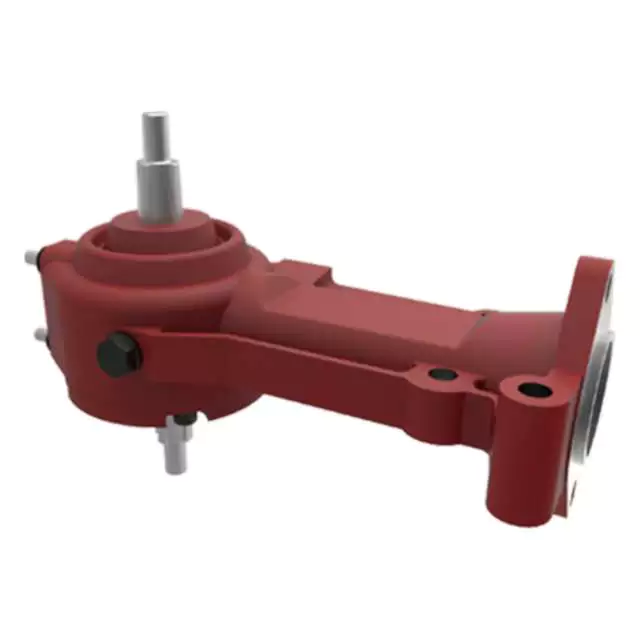
Considérations relatives aux boîtes de vitesses pour l'agriculture intensive
Les applications agricoles intensives nécessitent des réducteurs robustes et fiables, capables de supporter des charges élevées, des conditions difficiles et une utilisation fréquente. Voici les principaux critères à prendre en compte pour le choix d'un réducteur destiné à l'agriculture intensive :
- Capacité de charge : Les boîtes de vitesses robustes doivent avoir une capacité de charge élevée pour répondre aux exigences des machines agricoles, telles que les motoculteurs, les charrues et les moissonneuses-batteuses.
- Durabilité du matériau : Les boîtes de vitesses doivent être construites à partir de matériaux durables, tels que l'acier trempé ou la fonte, capables de résister aux contraintes et aux chocs associés aux tâches intensives.
- Étanchéité et protection : Des mécanismes d'étanchéité et de protection efficaces, tels que des joints et des garnitures robustes, empêchent la pénétration de saletés, d'eau et de contaminants susceptibles de provoquer une usure prématurée et des dommages.
- Système de lubrification : Un système de lubrification fiable et efficace est crucial pour les boîtes de vitesses à usage intensif afin d'assurer une lubrification adéquate des composants sous des charges et des températures élevées.
- Dissipation de la chaleur : Les applications exigeantes génèrent une chaleur importante. Les boîtes de vitesses doivent être équipées de mécanismes de dissipation thermique efficaces, tels que des ailettes de refroidissement ou des refroidisseurs d'huile, afin d'éviter la surchauffe et de maintenir leurs performances.
- Conception et construction : La conception de la boîte de vitesses doit intégrer un carter renforcé, des roulements plus grands et des engrenages robustes pour supporter des charges importantes sans compromettre l'intégrité structurelle.
- Alignement et montage : Un alignement et un montage corrects sont essentiels pour garantir une transmission de puissance fluide et efficace. Un mauvais alignement peut entraîner une usure accrue et une durée de vie réduite de la boîte de vitesses.
- Accessibilité de la maintenance : Les réducteurs pour applications industrielles doivent être conçus pour faciliter l'accès lors de la maintenance. Des éléments tels que les couvercles amovibles et les points d'inspection simplifient l'entretien et les réparations.
- Compatibilité: Les réducteurs doivent être compatibles avec les machines et les tâches spécifiques pour lesquelles ils seront utilisés. Des rapports de transmission et des configurations d'arbre de sortie personnalisables améliorent leur polyvalence.
- Fiabilité et longévité : Les boîtes de vitesses robustes doivent être conçues pour durer, avec une fabrication de qualité et des composants capables de résister aux conditions exigeantes des opérations agricoles.
- Sécurité: Les dispositifs de sécurité, tels que les protections et les mécanismes d'arrêt d'urgence, sont essentiels pour protéger les opérateurs et le personnel à proximité des dangers potentiels.
- Considérations environnementales : La conception des boîtes de vitesses doit tenir compte des réglementations environnementales et des normes d'émissions afin de minimiser l'impact sur l'environnement.
- Rapport coût-efficacité : Bien que les boîtes de vitesses robustes nécessitent un investissement initial plus important, leur durabilité et leurs performances contribuent à une rentabilité à long terme en réduisant les temps d'arrêt et la nécessité de remplacements fréquents.
En tenant compte de ces facteurs, les agriculteurs peuvent sélectionner les boîtes de vitesses robustes appropriées qui améliorent la productivité et la fiabilité de leurs exploitations agricoles.
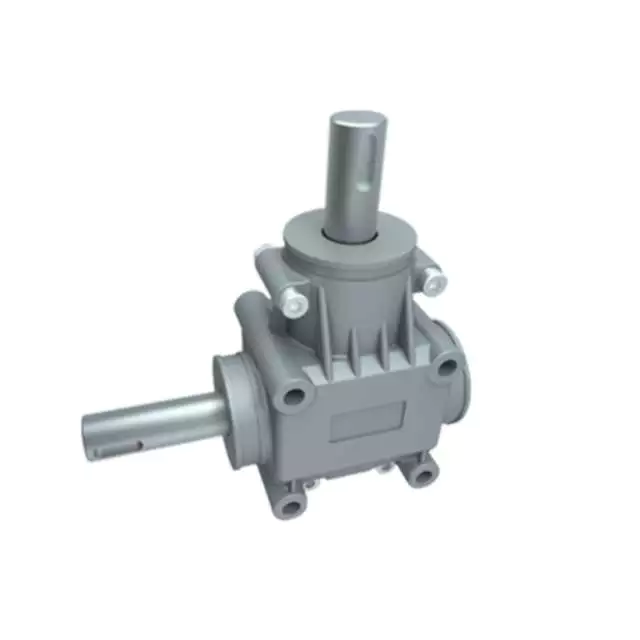
Types of Farming Equipment Incorporating Agricultural Gearboxes
Agricultural gearboxes play a vital role in various farming equipment, enhancing their efficiency and enabling them to perform essential tasks. Here are some types of farming equipment that commonly incorporate agricultural gearboxes:
- Tractors: Agricultural gearboxes are integral components of tractors, contributing to power transmission from the engine to various attachments such as plows, harrows, and mowers.
- Harvesters: Harvesters, used to gather crops like grains, fruits, and vegetables, utilize gearboxes to drive conveyor systems and separators, ensuring smooth and efficient harvesting operations.
- Planters and Seeders: Planters and seeders rely on gearboxes to precisely distribute seeds and fertilizers while maintaining the desired planting depth.
- Sprayers: Agricultural gearboxes are used in sprayers to drive pumps that distribute pesticides, herbicides, and fertilizers over fields.
- Hay Balers: Gearboxes are essential in hay balers for compacting and forming bales of hay, enabling easy storage and transportation.
- Manure Spreaders: Manure spreaders incorporate gearboxes to distribute and spread fertilizers and compost evenly across fields.
- Grain Augers: Grain augers, used for loading and unloading grains, feature gearboxes to drive the rotating screw mechanism that lifts and transfers grains.
- Cultivators: Cultivators use gearboxes to drive rotating tines or blades that loosen and prepare the soil for planting.
- Rotary Cutters: Rotary cutters, often attached to tractors, utilize gearboxes to power the spinning blades used for cutting tall grass, weeds, and brush.
- Threshers: Threshers, employed for separating grains from their husks or stalks, incorporate gearboxes to drive the threshing mechanisms.
These examples demonstrate the diverse applications of agricultural gearboxes across a wide range of farming equipment. By providing reliable power transmission and control, agricultural gearboxes contribute significantly to the productivity and efficiency of modern agricultural practices.
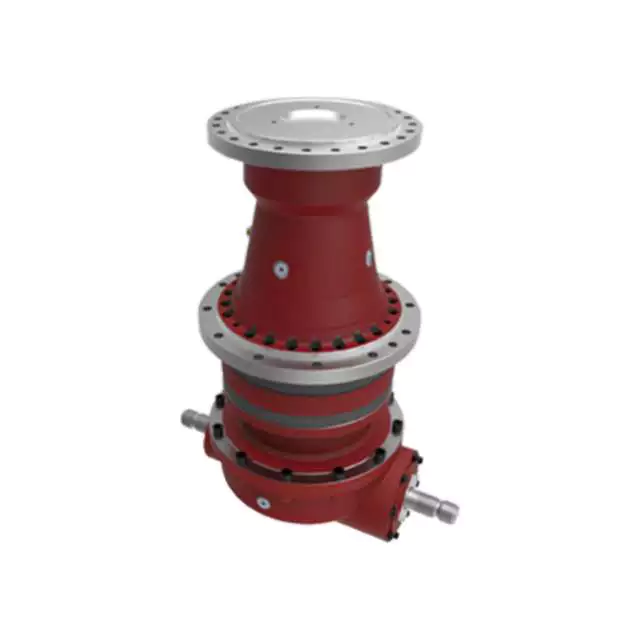
Maintenance Requirements for Agricultural Gearboxes
Maintaining agricultural gearboxes is crucial to ensure the smooth and efficient operation of farming equipment. Proper maintenance helps extend the lifespan of gearboxes and prevents costly breakdowns. Here are the key maintenance requirements:
- Regular Inspections: Conduct routine visual inspections to check for signs of wear, damage, leaks, or misalignment. Regularly inspect gear teeth, seals, and bearings for any issues.
- Lubrification: Proper lubrication is essential to minimize friction and wear in gearboxes. Follow the manufacturer’s guidelines for the type of lubricant to use and the recommended intervals for lubrication.
- Lubricant Checks: Monitor the gearbox’s lubricant levels and quality regularly. Replace or replenish lubricants as needed, and ensure that contaminants are kept out of the lubrication system.
- Tightening Bolts and Fasteners: Check and tighten bolts, nuts, and fasteners to prevent loosening due to vibrations during operation. Loose components can lead to misalignment and premature wear.
- Seal Inspection: Examine seals for leaks and proper sealing. Damaged or worn seals should be replaced promptly to prevent lubricant leakage and the ingress of contaminants.
- Nettoyage: Keep gearboxes clean by removing dirt, debris, and residue. Regular cleaning prevents abrasive particles from entering the gearbox and causing damage.
- Alignment: Ensure that gearboxes are properly aligned with connected components, such as shafts and couplings. Misalignment can lead to increased wear and reduced efficiency.
- Temperature Monitoring: Monitor the operating temperature of the gearbox. Abnormal temperature increases may indicate issues like overloading or insufficient lubrication.
- Filter Replacement: If the gearbox has a filtration system, regularly replace or clean the filters to prevent contaminants from entering the gearbox.
- Expert Inspection: Periodically have gearboxes inspected by qualified technicians. They can identify potential problems that may not be visible during routine inspections.
Adhering to these maintenance requirements ensures that agricultural gearboxes remain in optimal condition and contribute to the reliability and efficiency of farming equipment. Regular maintenance not only prevents unexpected downtime but also prolongs the service life of the gearboxes, ultimately benefiting the productivity of agricultural operations.


editor by CX 2023-12-26