
PTO Shaft Vibration at High Speed: Why It Happens and How to Fix It
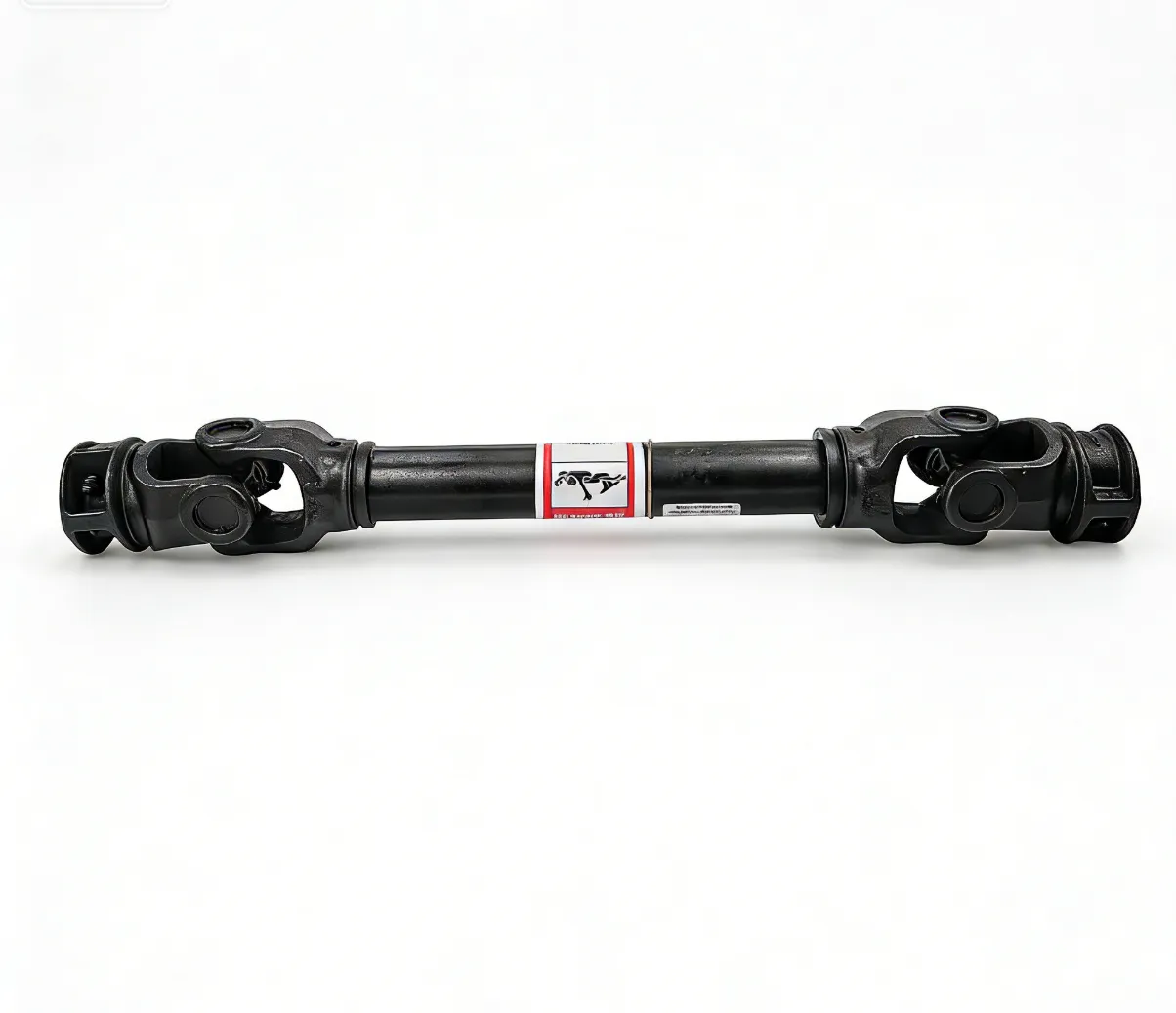
A PTO shaft that vibrates at high speed is not a minor nuisance — it is a mechanical warning that requires immediate diagnosis. Vibration in a rotating shaft means mass is not evenly distributed around the rotational axis, or that a joint is binding rather than articulating freely, or that the shaft is operating beyond its safe angular limit. Each of these causes produces a distinct vibration signature and requires a different remedy. Running a vibrating PTO shaft at full operating speed without addressing the cause accelerates every component in the drivetrain — cross joints, telescoping tubes, bearings in both the tractor gearbox and the implement input — and shortens their service life significantly.
This guide covers every common cause of PTO shaft vibration at high speed, how to identify which cause is responsible on your specific shaft, and what to do to correct it.
The Five Causes of PTO Shaft Vibration at High Speed
A cross joint with worn needle roller bearings does not rotate smoothly — it produces a cyclic speed variation as each worn bearing cup passes through the load zone. At low shaft speeds this appears as a knock or click. At high speed, the cyclic variation becomes a continuous vibration felt through the tractor seat and heard as a resonant humming that changes pitch with engine RPM. Diagnosis: disconnect the shaft, grip each yoke and check for play in each trunnion axis. Any detectable play confirms cross joint wear. Remedy: replace the cross joint immediately.
A PTO shaft operating at an angle greater than its rated maximum (typically 15–20 degrees for standard cross joints, up to 80 degrees for wide-angle joints) produces inherent speed variation in the driven shaft. At the extreme of each revolution, the driven shaft momentarily accelerates and then decelerates — this cyclic speed variation creates torsional vibration that increases with operating angle and shaft speed. Diagnosis: observe the implement position relative to the tractor during field operation. If the implement is hitched very high or the tractor is operating on a significant side slope, operating angle may be excessive. Remedy: adjust hitch height to reduce operating angle, or fit a wide-angle PTO shaft rated for the actual working angle.
A shaft tube that has been bent from a rock impact or from the implement being driven over at an incorrect angle will create imbalance on every revolution. The vibration is proportional to shaft speed and does not appear at low RPM but becomes severe at full PTO operating speed. Diagnosis: remove the shaft and roll it on a flat surface. A bent tube will rock visibly. Also sight down the shaft length — any visible bow indicates damage. Remedy: shaft tube replacement. A bent tube cannot be safely straightened — the internal telescoping profile will have been distorted at the bend point.
As the inner and outer telescoping tubes wear, radial clearance increases between them. At operating speed, this clearance allows the inner tube to orbit slightly inside the outer tube — an effective imbalance that varies as the shaft extends and retracts with implement movement. Diagnosis: extend the shaft to its working length and shake the inner tube radially. Perceptible radial movement indicates excessive telescoping wear. Remedy: replace the telescoping tube pair. Operating with excessive telescoping clearance also risks the inner tube separating from the outer under extension loads.
The plastic safety shield that surrounds the shaft is designed to be stationary while the shaft rotates inside it. If the shield becomes cracked, deformed, or if its bearing support at the shaft end fails, the shield begins to rotate with the shaft or contact it intermittently. Diagnosis: with the tractor stopped and the PTO disengaged, check that the shield rotates freely on its bearings and does not contact the shaft tube at any point. Remedy: replace the shield section or its end bearing. A damaged shield is both a vibration source and a safety hazard — do not operate with a damaged shield.
Diagnosis Sequence: Which Cause Is Responsible?
| Vibration Character | Most Likely Cause | First Check |
|---|---|---|
| Starts above a specific RPM, worsens with speed | Bent tube or telescoping wear | Roll shaft on flat surface |
| Cyclic knock that becomes continuous hum at speed | Worn cross joint | Check trunnion play by hand |
| Worse when implement is raised high or on side slopes | Excessive operating angle | Measure hitch angle at work position |
| Irregular rattling that varies with shaft extension | Shield contact or telescoping wear | Check shield bearing and tube clearance |
For replacement cross joints, telescoping tube pairs, and complete PTO shaft assemblies, browse our transmission shaft catalog. Contact [email protected] with your shaft dimensions and the vibration character described above for a targeted replacement recommendation.
PTO Shaft Replacement Parts in Stock
PRR Tractor Part stocks cross joints, telescoping tube pairs, and complete PTO shaft assemblies. Provide your shaft length, cross joint size, and vibration description for a targeted recommendation.
الأسئلة الشائعة
PTO Shaft Parts — Cross Joints, Tubes and Complete Assemblies
Identify your vibration cause, then get the right replacement — we stock cross joints, tube pairs, and complete shafts.
PRR Tractor Part Limited Partnership | [email protected]
304/1170 سوي فاهونيوثين 49/1، تقاطع 6، منطقة طلعت بانج خين الفرعية، منطقة لاك سي