
معايير المنتج
The spline shaft within a tractor’s transmission shaft, particularly in Kubota models, is engineered to precise specifications to ensure reliable power transfer and durability under demanding agricultural conditions in Thailand. Understanding these parameters is crucial for accurate wear assessment, as deviations can indicate the need for replacement to prevent operational failures. The following table outlines key parameters for a standard Kubota PTO spline shaft, derived from manufacturer guidelines for models like the L series and M series, where compact tractors typically feature 1-3/8 inch diameter with 6 splines for 540 RPM operations, while larger models may use 1-3/8 inch with 21 splines for 1000 RPM. These specs help in measuring wear using tools like micrometers and calipers, comparing against nominal values to detect excessive erosion or deformation. For instance, spline depth and width tolerances are tight to maintain torque transmission efficiency, and any reduction beyond 0.1 mm in critical dimensions often signals replacement. In Thailand’s humid and dusty environments, corrosion can accelerate wear, making regular checks essential for safety and productivity. Farmers facing issues like vibration or slippage can use these parameters to diagnose problems early, avoiding costly downtime during planting or harvesting seasons. Adhering to these standards ensures compatibility with implements, reducing the risk of mismatched connections that exacerbate wear. Moreover, Kubota’s carburized steel construction provides baseline hardness ratings, typically around 58-62 HRC, against which surface degradation can be evaluated. By documenting measurements over time, users can track wear progression, aligning with preventive maintenance strategies promoted in Thai agricultural cooperatives. This technical approach not only solves immediate diagnostic challenges but also supports long-term equipment management in diverse terrains from rice fields to orchards.
| المعلمة | Value |
|---|---|
| Spline Diameter | 1-3/8 inches (34.9 mm) |
| Number of Splines | 6 (for 540 RPM models) |
| Spline Width (Nominal) | 5.5 mm |
| Spline Depth (Nominal) | 3.0 mm |
| Material Hardness | 58-62 HRC |
| Torque Capacity | Up to 460 Nm |
| Wear Tolerance (Max Reduction in Spline Depth) | 0.1 mm |
| Operating Speed | 540 RPM |
| التوافق | Kubota L, B, M series |
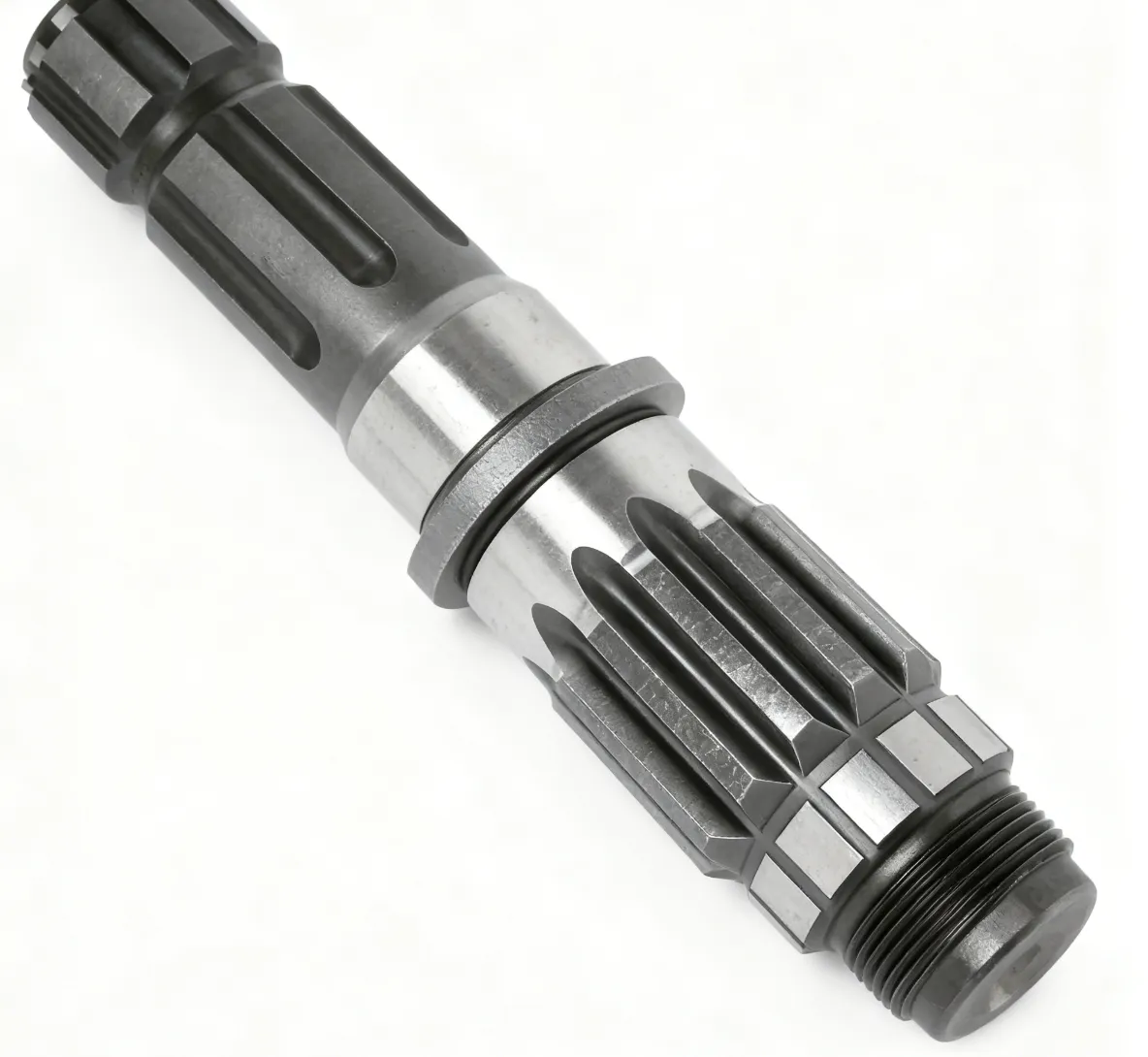
Introduction to Tractor Transmission Spline Shafts
The spline shaft, an integral part of the tractor’s transmission shaft or PTO system, is designed to transmit rotational power from the engine to attached implements with high precision and minimal backlash. In Kubota tractors, it features interlocking grooves or splines that engage with corresponding components, ensuring secure torque transfer while accommodating minor misalignments during operation. Its primary function is to facilitate efficient energy delivery, enabling tasks such as tilling, mowing, or pumping in agricultural settings. Without a properly functioning spline shaft, power loss or mechanical failure can occur, disrupting farming activities and leading to increased operational costs.
In real-world applications, particularly in Thailand’s varied agricultural landscapes, the spline shaft addresses challenges like variable loads and environmental stressors by providing a robust connection point. For example, in wet paddy fields, it must resist corrosion and maintain grip under slippery conditions, solving issues of slippage that could halt work. Technically, the splines distribute torque evenly, reducing stress concentrations that might cause premature failure. Users can identify wear through symptoms like unusual vibrations or noises, which indicate eroded splines failing to mesh properly. Regular inspection, involving cleaning and visual checks for cracks or rounding of edges, helps mitigate these problems, extending the component’s lifespan. Furthermore, lubrication plays a key role in preventing fretting wear, a common issue in high-humidity areas. By understanding its role, farmers can implement proactive measures, such as torque testing, to ensure consistent performance. This not only enhances safety but also optimizes fuel efficiency, contributing to sustainable practices in Thai agriculture where resource conservation is paramount.
Key Components of Related Transmission Systems
While the spline shaft is central to power transmission, it interacts with several key components in the gearbox and PTO assembly, each playing a vital role in overall system integrity. Recognizing these elements aids in comprehensive wear assessment and maintenance for Kubota tractors.
Essential Parts and Their Functions
– Splines: These grooved ridges on the shaft enable precise engagement with yokes or couplings, transmitting torque without slippage. They address alignment issues in dynamic operations, but wear here manifests as rounded edges, necessitating replacement to avoid power loss.
– Universal Joints: Connecting shaft sections, they allow angular flexibility, compensating for tractor-implement movements. In Thailand’s uneven terrains, they prevent binding, but worn joints cause vibrations, signaling spline stress.
– Yokes and Couplings: These secure the shaft to the tractor and implement, ensuring stable connections. They solve quick-attachment needs, yet mismatched yokes accelerate spline wear through improper fit.
– Protective Guards: Enclosing the rotating shaft, they enhance safety by preventing entanglement. While not directly mechanical, damaged guards expose splines to debris, exacerbating environmental wear in dusty fields.
Inspection and Wear Evaluation
Evaluating these components involves using calipers to measure spline dimensions against Kubota specs, checking for deviations that indicate excessive wear. For instance, if spline width reduces below nominal, it compromises torque capacity, leading to failures under load.
Maintenance Strategies
Implementing routine lubrication and alignment checks resolves common problems like corrosion-induced seizing, common in tropical climates, thereby prolonging component life.
At PRR TRACTOR PART LIMITED PARTNERSHIP, we provide high-quality, compatible replacement parts for Kubota transmission shafts, ensuring seamless fit with original equipment at affordable prices. Discover our range at أعمدة نقل الحركة to address your wear concerns effectively.
سياسات المنتجات المحلية في تايلاند
In Thailand, regulations surrounding agricultural machinery components, including transmission spline shafts, are governed by frameworks aimed at ensuring quality, safety, and economic fairness, especially following the 2026 customs updates. The Customs Department’s enforcement of the Customs Act 2017 and Tariff Decree 2017 now applies duties and 7% VAT to all imports, regardless of value, eliminating previous exemptions for items under THB 1,500. This policy shift, effective from January 1, 2026, targets unfair competition from low-cost foreign goods, benefiting local distributors and encouraging compliance with Thai Industrial Standards (TIS) for durability and performance. For spline shafts compatible with Kubota tractors, importers must provide detailed CIF valuations and certifications, addressing issues like substandard parts that fail prematurely in harsh conditions.
These measures solve practical challenges such as market saturation with inferior imports, which previously led to frequent breakdowns and safety hazards in farming operations. By mandating TIS adherence, policies ensure components withstand Thailand’s climate, reducing wear from humidity and dust. Additionally, FTAs with Japan facilitate tariff reductions for genuine Kubota parts, promoting technology access while the BOI offers incentives for local assembly, fostering employment in agricultural hubs. Environmental regulations under the Ministry of Agriculture emphasize eco-friendly materials, mitigating pollution from degraded equipment. Businesses navigating these must engage customs experts to avoid fines, transforming regulatory hurdles into advantages for reliable supply chains. For companies like PRR TRACTOR PART LIMITED PARTNERSHIP, alignment with these policies guarantees product integrity, supporting Thai farmers’ productivity goals amid modernization efforts.
For further insights into our compliance and offerings, explore our معلومات عنا page. To discuss specific needs or policy impacts, please اتصل بنا.
التعليمات
What are the visual signs of spline shaft wear?
Look for rounded edges, cracks, rust, or deformation on splines; these indicate erosion that reduces grip and requires replacement to prevent slippage.
How do I measure spline wear accurately?
Use micrometers to check spline width and depth against Kubota specs; reductions over 0.1 mm signal excessive wear necessitating immediate replacement.
What noises indicate spline shaft damage?
Grinding, clunking, or rattling during operation suggest misalignment or wear; inspect promptly to avoid further damage.
When should I replace a worn spline shaft?
Replace if measurements exceed tolerances, vibrations increase, or power transfer slips, ensuring safety and efficiency in tasks.
Can I repair a damaged spline instead of replacing?
For minor wear, welding and machining may suffice, but severe damage requires full replacement with genuine parts for reliability.
How does humidity affect spline wear in Thailand?
High humidity accelerates corrosion; regular lubrication and protective coatings mitigate this, extending shaft life in tropical conditions.
What tools are needed for spline inspection?
Calipers, micrometers, and torque wrenches; clean the area first for accurate assessments of wear.
Is mismatched equipment a cause of spline wear?
Yes, incorrect spline counts or diameters lead to rapid erosion; always match to Kubota standards for compatibility.
How often should I inspect the PTO spline shaft?
Inspect every 50-100 hours of use or seasonally; early detection prevents costly failures during peak farming periods.
Where can I source replacement spline shafts in Thailand?
Contact PRR TRACTOR PART LIMITED PARTNERSHIP at [email protected] or visit our address at 304/1170 Soi Phahonyothin 49/1, Intersection 6, Talat Bang Khen Subdistrict, Lak Si District for quality, affordable options.