
Popis produktu
Vynikající díly z práškové metalurgie, kovové spékané díly
Můžeme nabídnout různé díly z práškové metalurgie, včetně dílů na bázi železa a mědi, v nejvyšší kvalitě a za nejnižší cenu. Zašlete nám prosím pouze výkres nebo vzorek a my jej vyrobíme dle požadavků zákazníka. Pokud máte zájem o náš produkt, neváhejte nás kontaktovat, rádi vám nabídneme nejvyšší kvalitu a nejlepší služby. Děkujeme!
Jak spolupracujeme s našimi klienty
1. Pro experta na design nebo velkou společnost s vlastním inženýrským týmem: preferujeme, abyste od nás obdrželi kompletní balíček RFQ včetně výkresu, 3D modelu, množství a obrázků;
2. Pro majitele začínající firmy nebo začínající inženýry: stačí poslat nápad, který chcete vyzkoušet, ani nemusíte vědět, co je to odlévání;
3. Náš prodejní tým vám do 24 hodin odpoví, aby potvrdil další podrobnosti a poskytl odhadovaný čas vypracování cenové nabídky.
4. Náš technický tým vyhodnotí váš dotaz a poskytne vám nabídku během 1–3 pracovních dnů.
5. V případě potřeby můžeme kdykoli domluvit schůzku k technické komunikaci s vámi a našimi techniky.
| Místo původu: | Jangsu, Čína |
| Typ: | Slinování práškovou metalurgií |
| Typ náhradních dílů: | Díly z práškové metalurgie |
| Zpráva o zkoušce strojního zařízení: | Pokud |
| Materiál: | Železo, nerez, ocel, měď |
| Klíčové prodejní argumenty: | Zajištění kvality |
| Typ formy: | Wolframová ocel |
| Materiální standard: | MPIF 35, DIN 3571, JIS Z 2550 |
| Aplikace: | Malé domácí spotřebiče, zámky, elektrické nářadí, automobilové, |
| Název značky: | SERVIS OEM |
| Pokovování: | Přizpůsobeno |
| Poprodejní servis: | Online podpora |
| Zpracování: | Prášková metalurgie, CNC obrábění |
| Prášková metalurgie: | Vysokofrekvenční kalení, ponoření do oleje |
| Kontrola kvality: | Inspekce 100% |
Výhoda procesu práškové metalurgie
1. Cenově výhodné
Konečné výrobky lze zhutnit metodou práškové metalurgie, což nevyžaduje nebo může zkrátit strojní zpracování. To může výrazně ušetřit materiál a snížit výrobní náklady.
2. Složité tvary
Prášková metalurgie umožňuje získávat složité tvary přímo z lisovacích nástrojů bez jakéhokoli obrábění, jako jsou zuby, drážky, profily, čelní geometrie atd.
3. Vysoká přesnost
Dosažitelné tolerance v kolmém směru zhutňování jsou typicky IT 8-9 po slinutí, po dimenzování je lze zlepšit až na IT 5-7. Další obráběcí operace mohou zlepšit přesnost.
4. Samomazání
Propojenou pórovitost materiálu lze vyplnit oleji, čímž se získá samomazné ložisko: olej zajišťuje stálé mazání mezi ložiskem a hřídelí a systém nepotřebuje žádné další externí mazivo.
5. Zelené technologie
Výrobní proces slinutých komponentů je certifikován jako ekologický, protože materiálový odpad je velmi nízký, produkt je recyklovatelný a energetická účinnost je dobrá, protože materiál se netaví.
Často kladené otázky
Q1: Jaký je typ platby?
A: Obvykle byste měli předem zaplatit 50% z celkové částky. Zbývající částka by měla být uhrazena před odesláním.
Q2: Jak zaručit vysokou kvalitu?
A: Inspekce 100%. Máme vysoce přesné testovací zařízení a testovací oddělení Carl Zeiss, abychom se ujistili, že každý výrobek splňuje požadavky na velikost, vzhled a tlakovou zkoušku.
Q3: Jak dlouho mi budete čekat na odpověď?
A: Budeme vás kontaktovat co nejdříve do 12 hodin.
Q4. A co vaše dodací lhůta?
A: Obecně to bude trvat 25 až 35 dní od obdržení vaší zálohy. Konkrétní dodací lhůta závisí na položkách a množství vaší objednávky. A pokud položka nebyla standardní, musíme počítat s dodatečnými 10–15 dny na výrobu nástrojů/forem.
Q5. Můžete vyrábět podle vzorků nebo výkresů?
A: Ano, můžeme vyrobit podle vašich vzorků nebo technických výkresů. Můžeme vyrobit formy a přípravky.
Q6: A co poplatek za nástroje?
A: Poplatek za nástroje se účtuje pouze jednou při první objednávce, všechny budoucí objednávky se neúčtují znovu, a to ani při opravě nebo údržbě nástrojů.
Q7: Jaká je vaše vzorová politika?
A: Můžeme dodat vzorek, pokud máme skladem hotové díly, ale zákazníci musí zaplatit cenu vzorku a náklady na kurýra.
Q8: Jak budujete dlouhodobý a dobrý obchodní vztah?
A: 1. Udržujeme dobrou kvalitu a konkurenceschopnou cenu, abychom zajistili prospěch našim zákazníkům;
2. Každého zákazníka respektujeme jako našeho přítele a upřímně s ním obchodujeme a navazujeme přátelství, bez ohledu na to, odkud pochází.
How to Replace a Bearing
If you want to select a bearing for a specific application, you should know a few basics. This article will give you an overview of ball, angular contact, and sliding-contact bearings. You can choose a bearing according to the application based on the characteristics of its material and preload. If you are not sure how to choose a bearing, try experimenting with it. The next step is to understand the Z-axis, which is the axes along which the bearing moves.
Z axis
When it comes to replacing your Z axis bearing, there are several things you must know. First, you need to make sure that the bearings are seated correctly. Then, you should check the tension and rotation of each one. To ensure that both bearings are equally tensioned, you should flex the Core to the desired angle. This will keep the Z axis perpendicular to the work surface. To do this, first remove the Z axis bearing from its housing and insert it into the Z axis motor plate. Next, insert the flanged bearing into the Z axis motor plate and secure it with 2 M5x8mm button head cap screws.
Make sure that the bearing plate and the Z Coupler part are flush and have equal spacing. The spacing between the 2 parts is important, as too much spacing will cause the leadscrew to become tight. The screws should be very loose, with the exception of the ones that engage the nylocks. After installing the bearing, the next step is to start the Z axis. Once this is done, you’ll be able to move it around with a stepper.
Úhlový styk
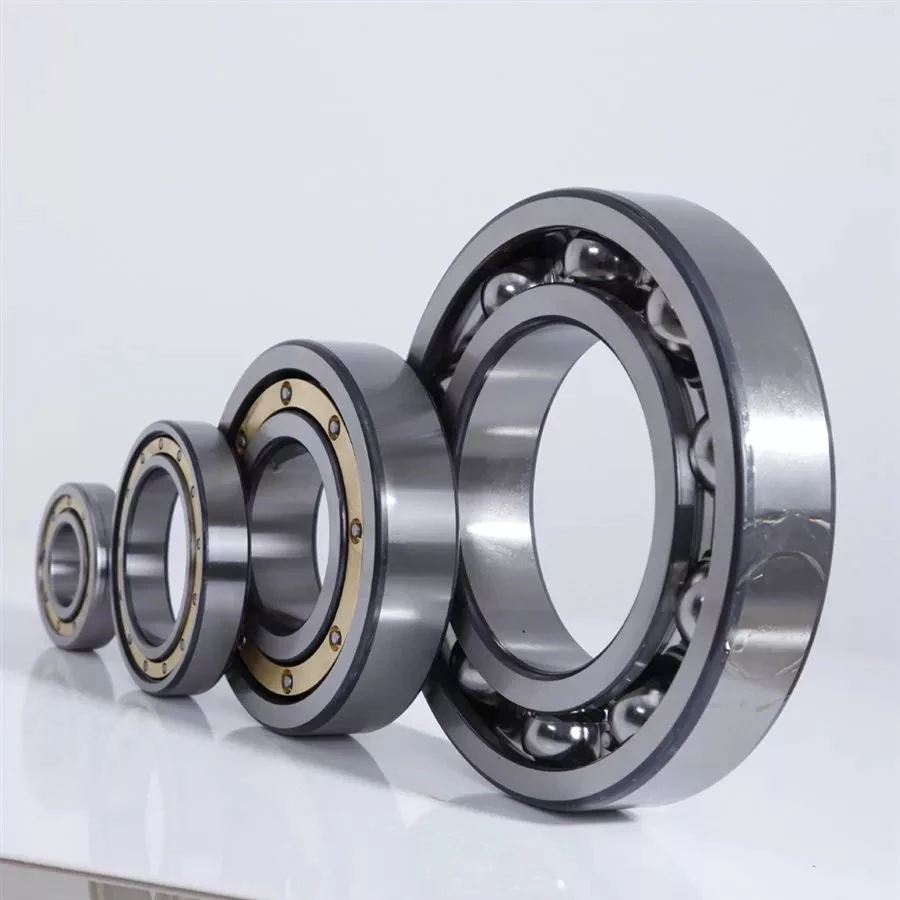
Ball bearings are made with angular contacts that result in an angle between the bearing’s races. While the axial load moves in 1 direction through the bearing, the radial load follows a curved path, tending to separate the races axially. In order to minimize this frictional effect, angular contact bearings are designed with the same contact angle on the inner and outer races. The contact angle must be chosen to match the relative proportions of the axial and radial loads. Generally, a larger contact angle supports a higher axial load, while reducing radial load.
Ball bearings are the most common type of angular contact bearings. Angular contact ball bearings are used in many applications, but their primary purpose is in the spindle of a machine tool. These bearings are suitable for high-speed, precision rotation. Their radial load capacity is proportional to the angular contact angle, so larger contact angles tend to enlarge with speed. Angular contact ball bearings are available in single and double-row configurations.
Angular contact ball bearings are a great choice for applications that involve axial loads and complex shapes. These bearings have raceways on the inner and outer rings and mutual displacement along the axial axis. Their axial load bearing capacity increases as the contact Angle a rises. Angular contact ball bearings can withstand loads up to 5 times their initial weight! For those who are new to bearings, there are many resources online dedicated to the subject.
Despite their complexity, angular contact ball bearings are highly versatile and can be used in a wide range of applications. Their angular contact enables them to withstand moderate radial and thrust loads. Unlike some other bearings, angular contact ball bearings can be positioned in tandem to reduce friction. They also feature a preload mechanism that removes excess play while the bearing is in use.
Angular contact ball bearings are made with different lubricants and cage materials. Standard cages for angular contact ball bearings correspond to Table 1. Some are machined synthetic resins while others are molded polyamide. These cage materials are used to further enhance the bearing’s axial load capacity. Further, angular contact ball bearings can withstand high speeds and radial loads. Compared to radial contact ball bearings, angular contact ball bearings offer the greatest flexibility.
Ball bearings
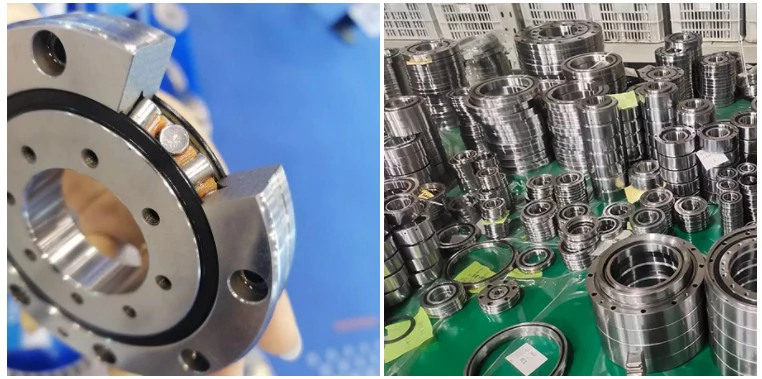
Ball bearings are circular structures with 2 separate rings. The smaller ring is mounted on a shaft. The inner ring has a groove on the outer diameter that acts as a path for the balls. Both the inner and outer ring surfaces are finished with very high precision and tolerance. The outer ring is the circular structure with the rolling elements. These elements can take many forms. The inner and outer races are generally made of steel or ceramic.
Silicon nitride ceramic balls have good corrosion resistance and lightweight, but are more expensive than aluminum oxide balls. They also exhibit an insulating effect and are self-lubricating. Silicon nitride is also suitable for high-temperature environments. However, this type of material has the disadvantage of wearing out rapidly and is prone to cracking and shattering, as is the case with bearing steel and glass. It’s also less resistant to heat than aluminum oxide, so it’s best to buy aluminum nitride or ceramic ball bearings for applications that are subjected to extremely high temperatures.
Another type of ball bearings is the thrust bearing. It has a special design that accommodates forces in both axial and radial directions. It is also called a bidirectional bearing because its races are side-by-side. Axial ball bearings use a side-by-side design, and axial balls are used when the loads are transmitted through the wheel. However, they have poor axial support and are prone to separating during heavy radial loads.
The basic idea behind ball bearings is to reduce friction. By reducing friction, you’ll be able to transfer more energy, have less erosion, and improve the life of your machine. With today’s advances in technology, ball bearings can perform better than ever before. From iron to steel to plastics, the materials used in bearings have improved dramatically. Bearings may also incorporate an electromagnetic field. So, it’s best to select the right 1 for your machine.
The life expectancy of ball bearings depends on many factors, including the operating speed, lubrication, and temperature. A single million-rpm ball bearing can handle between 1 and 5 million rotations. As long as its surface contact area is as small as possible, it’s likely to be serviceable for at least 1 million rotations. However, the average lifespan of ball bearings depends on the application and operating conditions. Fortunately, most bearings can handle a million or more rotations before they start showing signs of fatigue.
Sliding-contact bearings
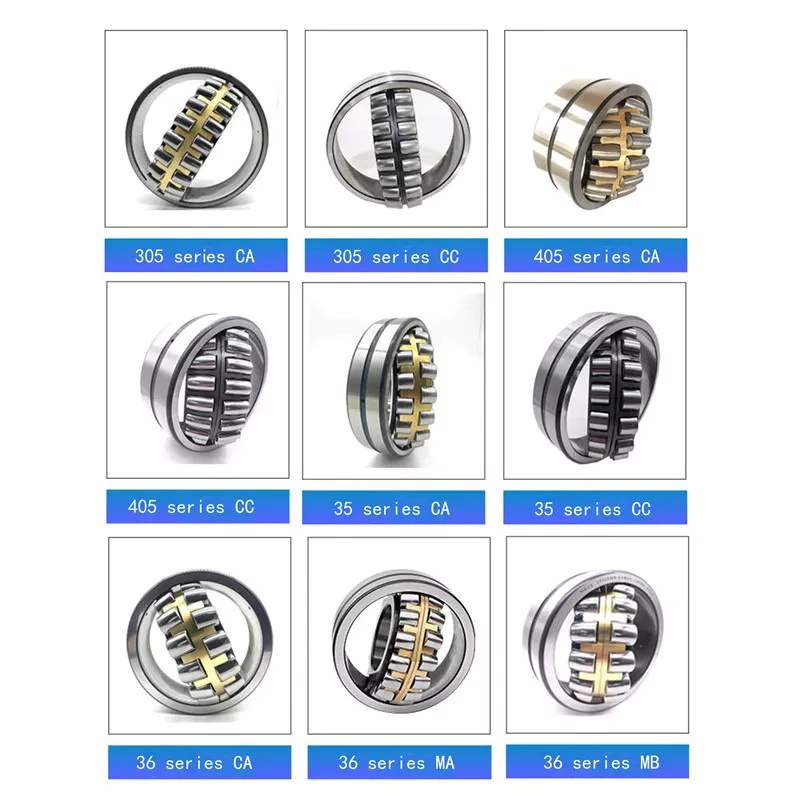
The basic principle behind sliding-contact bearings is that 2 surfaces move in contact with 1 another. This type of bearing works best in situations where the surfaces are made of dissimilar materials. For instance, a steel shaft shouldn’t run in a bronze-lined bore, or vice versa. Instead, 1 element should be harder than the other, since wear would concentrate in that area. In addition, abrasive particles tend to force themselves into the softer surface, causing a groove to wear in that part.
Sliding-contact bearings have low coefficients of friction and are commonly used in low-speed applications. Unlike ball and roller bearings, sliding contact bearings have to be lubricated on both sides of the contacting surfaces to minimize wear and tear. Sliding-contact bearings generally are made of ceramics, brass, and polymers. Because of their lower friction, they are less accurate than rolling-element bearings.
Sliding-contact bearings are also known as plain or sleeve bearings. They have a sliding motion between their 2 surfaces, which is reduced by lubrication. This type of bearing is often used in rotary applications and as guide mechanisms. In addition to providing sliding action, sliding-contact bearings are self-lubricating and have high load-carrying capacities. They are typically available in 2 different types: plain bearings and thrust bearings.
Sliding-contact linear bearing systems consist of a moving structure (called the carriage or slide) and the surfaces on which the 2 elements slide. The surfaces on which the bearing and journal move are called rails, ways, or guides. A bore hole is a complex geometry, and a minimum oil film thickness h0 is usually used at the line of centers. It is possible to have a sliding-contact bearing in a pillow block.
Because these bearings are porous, they can absorb 15 to 30% of the lubrication oil. This material is commonly used in automobile and machine tools. Many non-metallic materials are used as bearings. One example is rubber, which offers excellent shock absorbency and embeddability. While rubber has poor strength and thermal conductivity, it is commonly used in deep-well pumps and centrifugal pumps. This material has high impact strength, but is not as rigid as steel.