
Why Shaft Sizing Matters More Than Most Operators Realize
An undersized PTO shaft is one of the most common causes of preventable driveline failure on farm equipment. The failure mode is rarely dramatic — it starts as a hairline fatigue crack in the cross-joint, a slight vibration, or creeping looseness in the telescoping section. By the time the shaft fails completely, the damage has usually spread to the implement gearbox input bearing or the tractor’s PTO stub shaft. Getting shaft size right from the start prevents a cascade of consequential damage that costs far more than the shaft itself.
This step-by-step guide covers every dimension and specification that must be confirmed before purchasing a PTO shaft for any tractor-implement combination — from torque requirements and collapsed length to overlap limits and joint angle constraints.
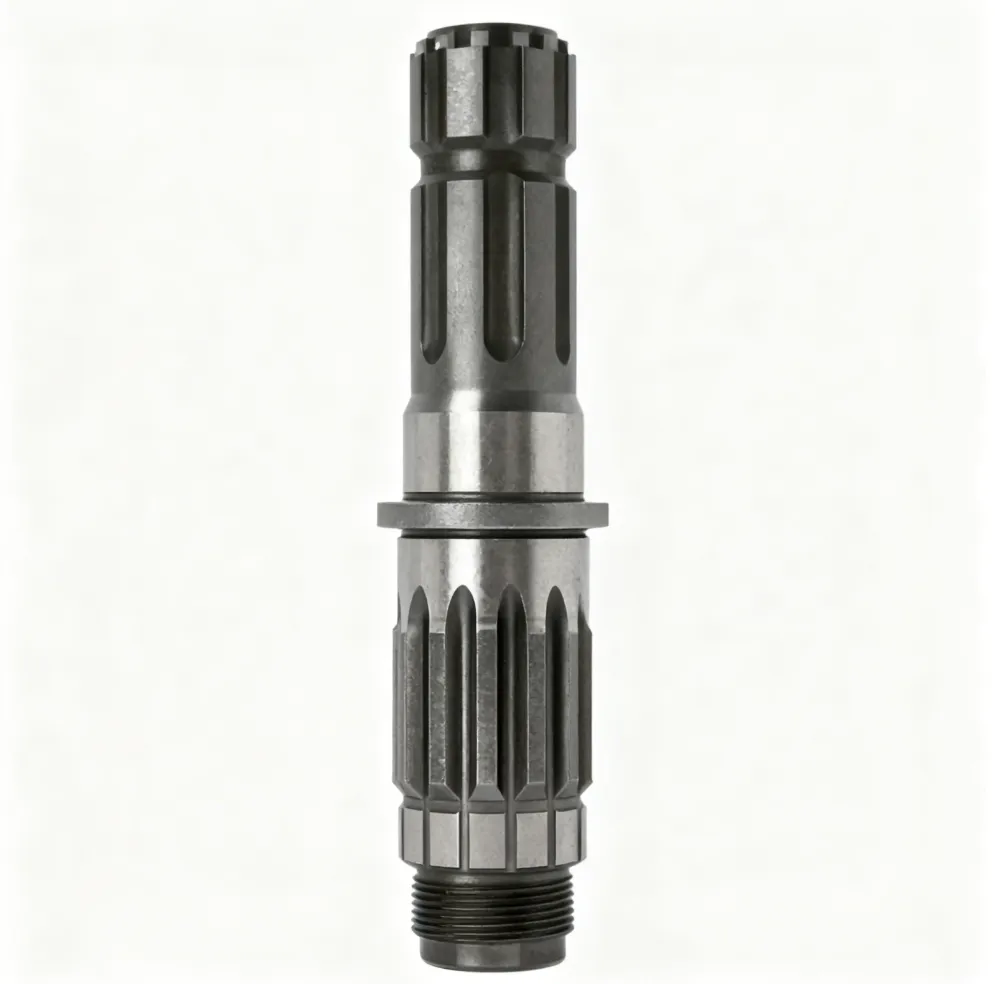
Step 1 — Confirm Tractor PTO Speed and Spline Profile
Before measuring length or calculating torque, confirm your tractor’s PTO output speed and the stub shaft spline count. This establishes the input end of the shaft specification. Count the splines on the tractor’s rear stub shaft: 6 splines = 540 RPM; 21 splines = 1000 RPM. On dual-speed PTO tractors, confirm which speed is selected and whether a stub shaft insert change is required. The tractor-end yoke of the replacement shaft must match this spline count exactly — a 6-spline yoke will not engage a 21-spline stub.
Step 2 — Identify Implement Input Shaft Requirements
The implement end of the shaft must match the implement gearbox input shaft specifications. Most implement input shafts are either 6-spline (540 RPM applications) or 21-spline (1000 RPM), with a 35 mm bore diameter. Some European implements use a 1-3/4 inch (44.5 mm) 20-spline shaft for heavy-duty 1000 RPM applications — verify before ordering. The implement’s operator manual specifies input shaft diameter, spline count, and any specific yoke configuration requirements.
Step 3 — Calculate Required Torque Rating
The shaft must be rated to handle the maximum torque the tractor can deliver at the PTO under peak demand conditions. Calculate required torque using the formula: Torque (Nm) = PTO Power (kW) × 9,550 / RPM. For a 60 HP tractor (approximately 44.7 kW PTO) running at 540 RPM: torque = 44.7 × 9,550 / 540 = approximately 790 Nm. Apply a service factor of 1.5–2.5 depending on implement type — higher for implements with sudden load spikes like flail mowers or balers, lower for smooth-running implements like irrigation pumps. A shaft with a continuous torque rating of 790 Nm needs to be upsized to handle 1,200–2,000 Nm peak loads under this service factor.
| Tractor HP (PTO) | 540 RPM Torque (Nm) | 1000 RPM Torque (Nm) | Min Shaft Series |
|---|---|---|---|
| Under 30 HP | ~395 Nm | ~213 Nm | Series 3 / W2400 |
| 30–55 HP | ~720 Nm | ~390 Nm | Series 4 / W2800 |
| 55–90 HP | ~1,180 Nm | ~637 Nm | Series 5 / W3100 |
| 90–130+ HP | ~1,710+ Nm | ~920+ Nm | Series 6 / W3400 |
Series designations are approximate equivalents — always verify manufacturer continuous and peak torque ratings.
Step 4 — Measure Collapsed Length and Maximum Extension
PTO shaft length must allow full telescoping range without bottoming out at minimum connection distance or separating at maximum implement-to-tractor distance. Measure these two critical dimensions:
With implement raised to maximum hitch height and tractor in shortest position, measure from tractor PTO center to implement input center. The shaft must not bottom out (full compression) at this measurement — leave at least 25 mm clearance from fully collapsed length.
With implement lowered to maximum working depth or extended to furthest operating position, measure the same tractor-to-implement center distance. The shaft must maintain at least 150 mm (6 inches) of telescoping overlap — less than this risks disengagement under field load.
The shaft’s telescoping range must comfortably accommodate the difference between minimum and maximum connected distances while respecting both the bottom-out and minimum-overlap limits at the extremes. If no standard shaft length satisfies these constraints, a custom-cut shaft is required. For full sizing methodology and cross-joint angle guidance, consult this PTO shaft selection guide.
Step 5 — Check Joint Operating Angle
Universal joint crosses within the shaft tolerate only a limited operating angle before cyclic speed variation becomes severe enough to damage the implement gearbox input shaft and bearings. Maximum recommended operating angles are: standard Cardan cross — 15° at 1000 RPM, 25° at 540 RPM; wide-angle constant velocity (CV) joint — up to 80° for slow-speed headland turning.
Check the angle by positioning the tractor and implement on flat ground in normal operating position and measuring the angle between the shaft and horizontal with a digital angle gauge. If the angle exceeds the limit for your PTO speed, a wide-angle CV joint shaft is required — do not attempt to operate a standard cross joint beyond its rated angle, as bearing failure typically occurs within a single season.
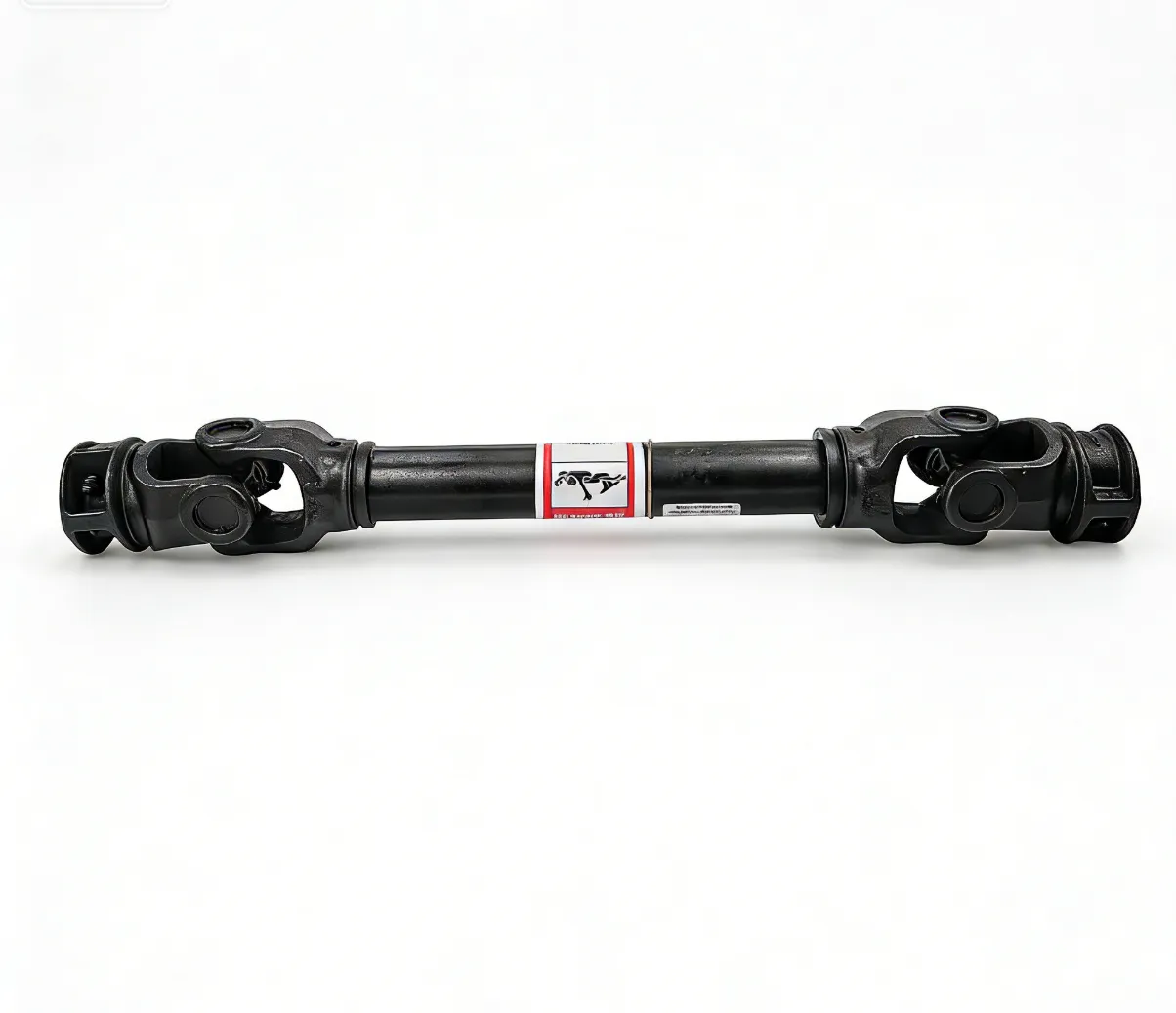
Overrunning Clutches and Shear Bolt Protection
Many implement types require additional driveline protection beyond the tractor’s PTO slip clutch. Two protection types are common:
Overrunning clutch — fitted on the implement-end yoke, allows the implement to freewheel faster than the shaft is turning (or spin down after PTO disengagement) without transmitting torque spikes back to the tractor. Essential on rotary mowers, flail mowers, and any implement with significant flywheel effect.
Shear bolt coupling — provides sacrificial mechanical protection, where a soft bolt shears at a calibrated torque, protecting both tractor and implement from peak overload. Common on compact tiller drives. Replacement shear bolts must always use the manufacturer’s specified grade — substituting a harder bolt defeats the protection entirely.
Need a PTO Shaft Sized to Your Setup?
PRR Tractor Part supplies PTO shafts matched to tractor HP, PTO speed, collapsed length, and protection type. Contact us with your tractor model and implement details.
Frequently Asked Questions
Get the Right PTO Shaft First Time
Our team sizes PTO shafts to your tractor HP, speed, and installation dimensions — no guesswork, no returns.
PRR Tractor Part Limited Partnership | [email protected]
৩০৪/১১৭০ ছয় ফাহোনয়োথিন ৪৯/১, ছেক্সন ৬, তালাট বাং খেন মহকুমা, লাক ছি জিলা