
A new agricultural gearbox requires a break-in period before being subjected to full operating loads — yet this is one of the most frequently skipped steps in agricultural equipment maintenance. The break-in period allows gear tooth surfaces and bearing raceways to conform micro-geometrically to each other under controlled conditions, smoothing out manufacturing surface irregularities before the full contact stress of rated load is applied. Gearboxes that miss the break-in period often develop premature tooth pitting and bearing fatigue within the first season — failures that are attributed to part quality but are caused entirely by the loading protocol during initial operation.
This guide covers the correct break-in procedure for agricultural gearboxes, the oil change that is essential after break-in, and the signs that break-in has been completed successfully.
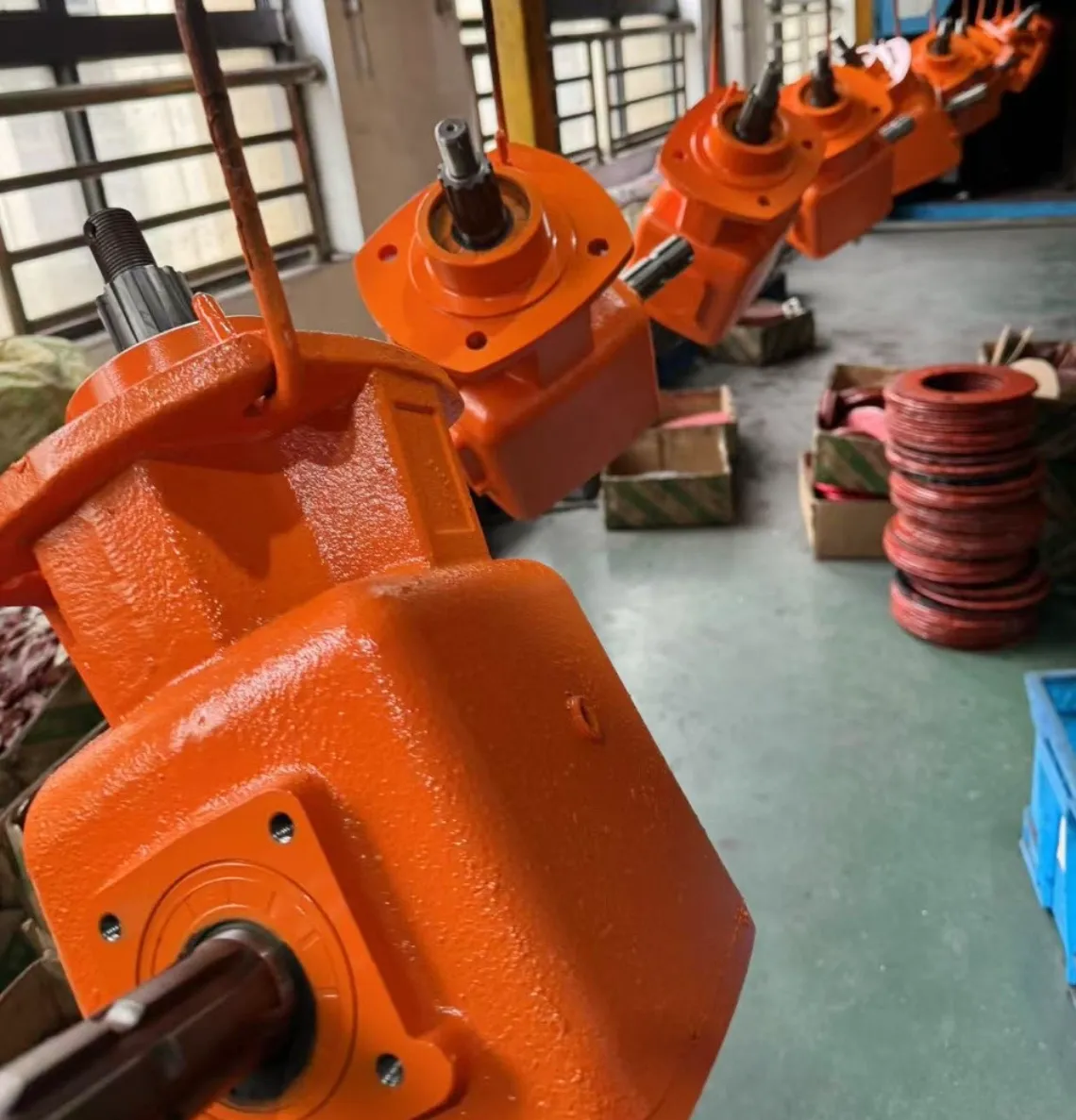
Why Break-In Matters for Gear Tooth Life
Machined gear tooth surfaces, while precise to within a few microns, are not perfectly smooth at the microscopic level. Each tooth surface has a roughness profile consisting of peaks and valleys. When two gear teeth first mesh, contact initially occurs only at the highest peaks — this concentrates the full contact load onto a very small area, producing contact stresses far higher than the nominal design stress. During break-in, these peaks wear down progressively under controlled load, distributing contact over progressively larger areas until full designed contact exists across the tooth face width. This wear-in process generates metal particles in the oil — which is why the first oil change after break-in is essential.
The Correct Break-In Procedure
Run the gearbox at operating speed with no implement load for the first two hours. This allows the oil to reach operating temperature, the bearings to seat in their housings, and the seal lips to conform to the shaft journals. During this phase, check the gearbox housing temperature by hand every 30 minutes — it should become warm to the touch but not too hot to hold. Excessive heat during no-load running indicates an assembly problem: excessive bearing preload, insufficient clearance, or incorrect oil viscosity.
Introduce implement load at 25–50% of the gearbox’s rated continuous power. For a tiller gearbox, this means operating at a reduced forward speed in light soil conditions. For a mower gearbox, this means cutting light grass at reduced ground speed. Run at this load level for approximately two hours. The gear tooth surfaces are beginning to conform — you may notice a slight initial roughness in operation that smooths out during this phase.
Increase load to 50–75% of rated capacity for the next four hours. Normal agricultural field operations at moderate working conditions fall naturally into this range. Continue monitoring gearbox temperature — a correctly broken-in gearbox should not run noticeably hotter at 75% load than at 50% load. A significant temperature increase when moving from light to moderate load suggests the break-in is not proceeding correctly and warrants an oil check and inspection.
After completing approximately 8 hours of break-in operation, drain the gearbox oil while it is still warm (warm oil carries particles in suspension better than cold oil). Inspect the drained oil — a small amount of fine grey metallic sediment at the bottom of the drain pan is normal and expected from the tooth surface conforming process. A large amount of coarse metallic particles indicates a problem requiring inspection before the gearbox is returned to service. Refill with fresh oil of the correct specification and grade. This oil change is mandatory — continuing operation with break-in particle-laden oil causes abrasive wear to continue long after the surfaces have conformed.
After the first oil change, the gearbox can be operated at full rated load. The tooth surfaces have conformed, the bearings are seated, and the oil is clean. Continue with the manufacturer’s specified oil change interval from this point forward — typically 250–500 hours for agricultural gearboxes in standard service, or the beginning of each season for seasonal-use equipment.
For replacement agricultural gearboxes and gearbox service parts, browse our danh mục hộp số nông nghiệp or contact [email protected] with your implement type, PTO speed, and power requirement.
New Agricultural Gearboxes in Stock
PRR Tractor Part stocks replacement agricultural gearboxes for tillers, mowers, spreaders, and PTO-driven implements. Contact us with your implement type and power specification for a confirmed match.
Câu hỏi thường gặp
Agricultural Gearboxes for Tillers, Mowers and Implements
540 and 1000 RPM PTO inputs, common reduction ratios, mounting flanges to specification — break-in guidance included.
Công ty TNHH Phụ tùng Máy kéo PRR | [email protected]
304/1170 Soi Phahonyothin 49/1, Ngã 6, P. Talat Bằng Khen, Huyện Lăk Sĩ