
What Do 540 RPM and 1000 RPM Actually Mean?
Every tractor PTO shaft spins at a rated output speed, and that speed determines which implements you can safely drive. The two dominant standards — 540 RPM and 1000 RPM — are not interchangeable. Using a 540 RPM implement on a 1000 RPM PTO, or vice versa, produces either dangerously excessive operating speed or severe under-power, both of which damage equipment or create safety hazards within minutes.
Yet many tractor owners purchase an implement without confirming PTO speed compatibility, only discovering the mismatch after delivery. This guide explains exactly what separates these two standards, how to identify which one your tractor runs, and how to choose correctly for every common farm implement type.
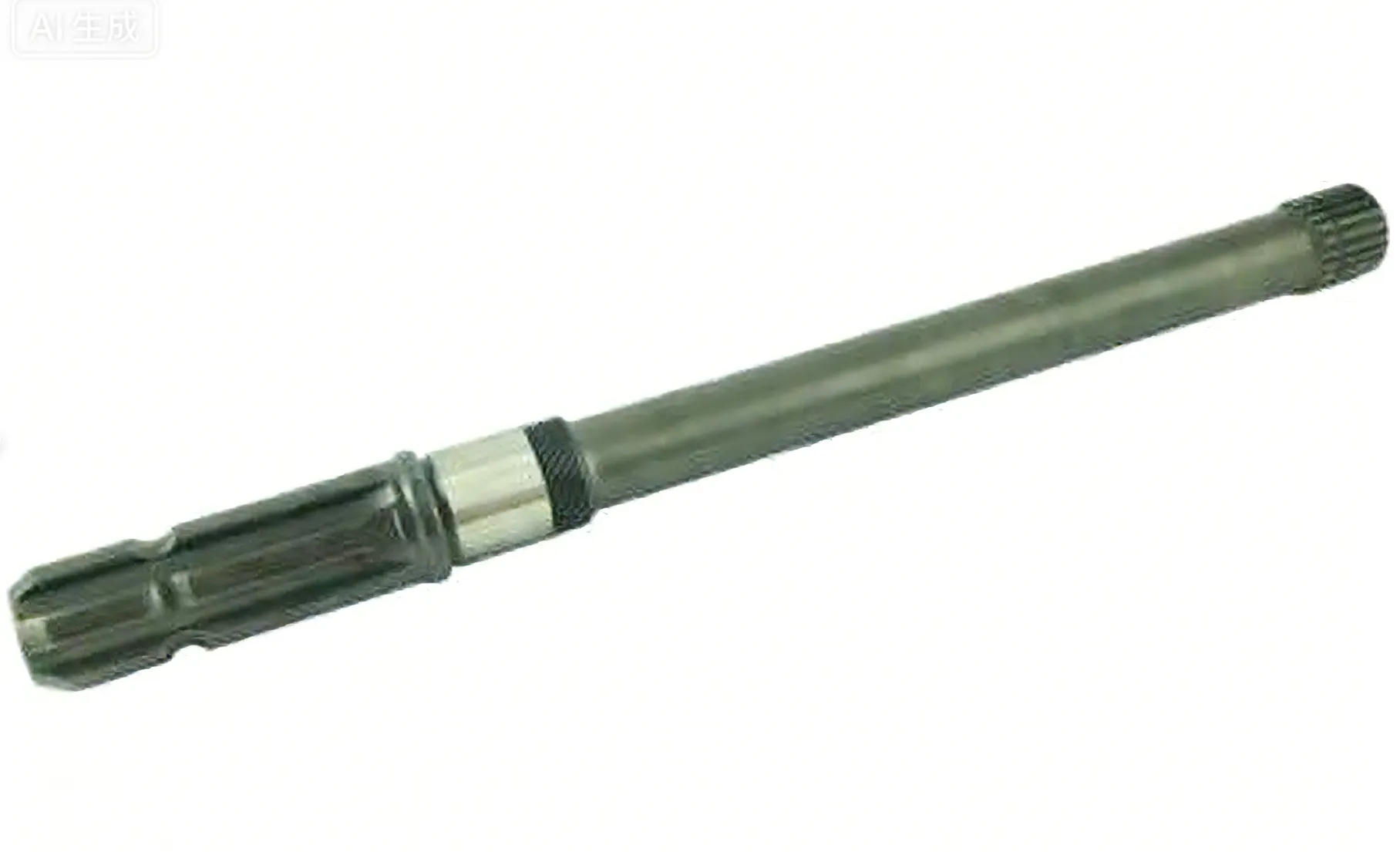
How PTO speed is defined
PTO speed refers to the rotational speed at the tractor’s rear power take-off stub shaft, measured in revolutions per minute. This speed is governed by the tractor’s engine RPM and an internal gear ratio set by the manufacturer. On most tractors, 540 RPM output occurs at a lower engine speed — typically around 1,700–2,000 engine RPM — while 1000 RPM output requires higher engine speeds, commonly 1,900–2,500 engine RPM depending on the model. The tractor engine does not directly determine PTO speed; the gear ratio does.
Why two standards exist
The 540 RPM standard dates to the early twentieth century, established when tractor engines and implements were smaller and lower-powered. As tractors grew in horsepower through the 1950s and 1960s, implement manufacturers needed a way to transmit more power without enlarging shaft diameters beyond practical limits. The solution was increasing rotational speed: at the same shaft diameter, doubling RPM from 540 to 1000 allows nearly double the power transmission. The 1000 RPM standard emerged to serve larger implements requiring higher power input without proportionally larger driveline components.
540 RPM vs 1000 RPM: Side-by-Side Comparison
The table below captures the key differences between the two standards across the dimensions that matter most for implement selection and safe operation.
| Factor | 540 RPM | 1000 RPM |
|---|---|---|
| Typical tractor HP | Under 50 HP | 50 HP and above |
| Shaft spline count | 6 splines | 21 splines |
| Shaft diameter | 35 mm (1-3/8 in) | 35 mm (1-3/8 in) |
| Power transmission | Lower (same torque, lower speed) | Higher (same torque, higher speed) |
| Typical implements | Small tillers, mowers, augers | Balers, large mowers, combines |
| Interchangeable? | No — spline counts differ; physically incompatible without adapter | |
Note: some large tractors offer both 540 and 1000 RPM outputs via a selector on the transmission — check your operator manual.
The Spline Count Difference — Why You Cannot Swap Shafts
Although both 540 RPM and 1000 RPM PTO stubs share the same outer diameter of 35 mm (1-3/8 inches), the number of splines cut into the shaft differs fundamentally. A 540 RPM stub has 6 splines; a 1000 RPM stub has 21 splines. These spline profiles are physically incompatible — a 6-spline implement yoke will not fit onto a 21-spline shaft, and forcing the connection damages both components.
What about 1000E (economy) PTO?
Many modern tractors above 70 HP offer a third option: 1000E, sometimes called Economy PTO. This setting still outputs 1000 RPM at the stub shaft, but achieves it at a significantly lower engine RPM — often around 1,500 engine RPM rather than the standard 1,900–2,100. The practical result is meaningful fuel savings when running light-to-medium implements that do not require full engine output. The 1000E setting uses the same 21-spline coupling as standard 1000 RPM — implement compatibility is identical.
Dual-speed PTO tractors
Larger utility and row-crop tractors frequently offer selectable dual-speed PTO, allowing the operator to choose between 540 and 1000 RPM from the cab. On these machines, the stub shaft physically changes spline profile — either mechanically through a sliding collar, or via separate stub shaft inserts that the operator swaps by hand. This flexibility allows a single tractor to run the full range of implements without compromise, but it requires confirming the current PTO mode before connecting each implement.

Choosing the Right Standard for Your Farm
The correct PTO speed standard is determined by the implements you run, not simply by tractor size. Many smaller tractors do offer 1000 RPM output, and many large tractors continue to run 540 RPM implements alongside higher-speed ones. The following breakdown covers the most common implement categories and their standard PTO speed requirements.
Implements that typically run at 540 RPM
Rotary tillers under 6 feet, rear-mounted mowers, compact bale spears, small post-hole diggers, grain augers, and landscaping implements generally operate at 540 RPM. These implements are engineered with internal gear ratios that produce the correct output shaft speed — such as blade RPM on a tiller or cutting head speed on a flail mower — when driven at 540 input RPM. Running a 540 RPM implement at 1000 RPM input produces approximately 85% overspeed, which causes mechanical failure within minutes of operation.
Implements that typically run at 1000 RPM
Round balers, large square balers, wide-cut disc mowers, combine header drives, forage harvesters, and large rotary cutters over 8 feet typically require 1000 RPM input. The higher input speed allows these implements to process crop material at the throughput rates their gearboxes and cutting systems were designed for. Underpowering a 1000 RPM implement with a 540 RPM tractor produces sluggish performance, excessive drive slip, and premature gearbox wear from sustained overloading.
Confirming implement speed rating before purchase
Always locate the PTO speed requirement in the implement’s operator manual — it appears in the specifications section and sometimes on a decal near the implement’s input gearbox. If you are sourcing a used implement without documentation, count the spline receivers on the implement yoke. Six-spline = 540 RPM; 21-spline = 1000 RPM. Do not rely on general implement category rules — some manufacturers produce both 540 and 1000 RPM variants of the same implement type, and the nameplate is the only reliable source of truth. For detailed sizing guidance across shaft types, see this PTO shaft selection guide.
Need a Replacement PTO Shaft?
PRR Tractor Part stocks 540 RPM and 1000 RPM PTO shafts in standard lengths with 6-spline and 21-spline profiles for major tractor and implement brands.
How PTO Speed Relates to Implement Gearbox Selection
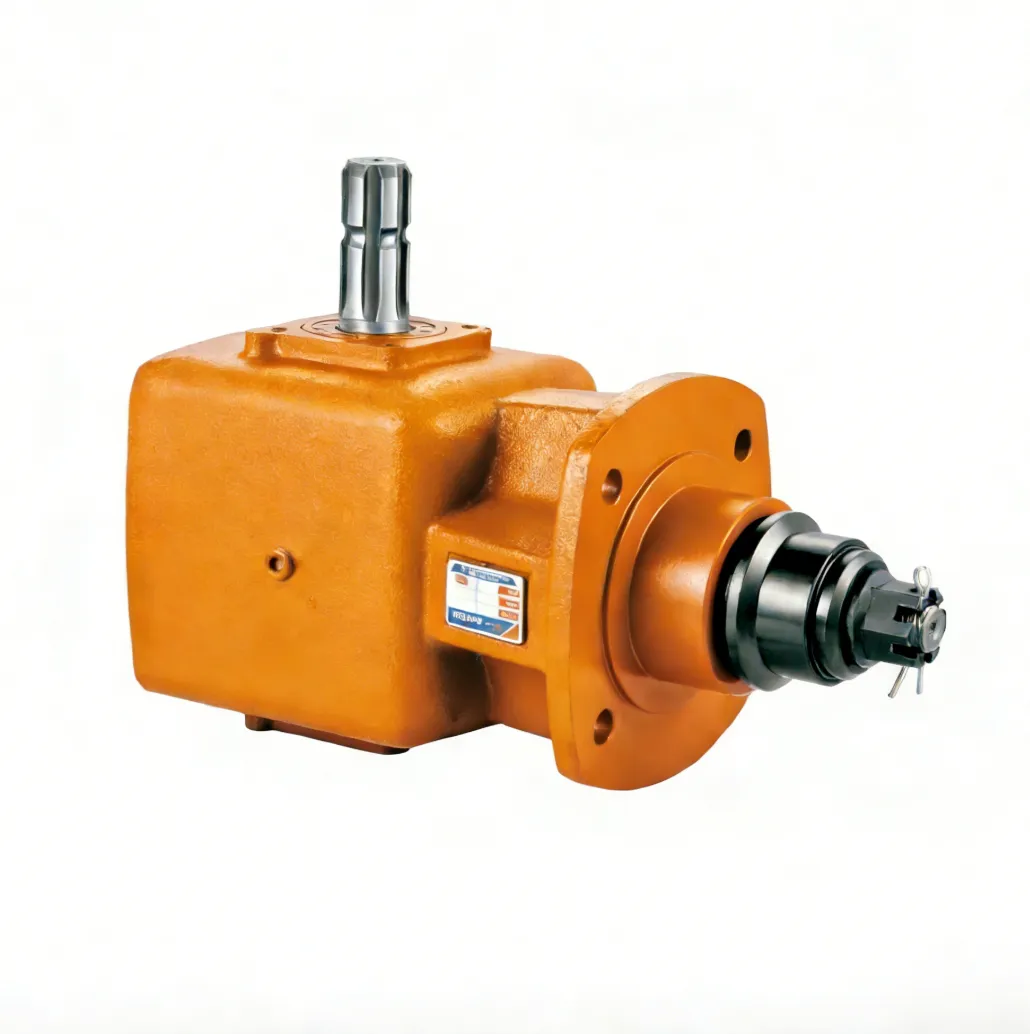
The PTO shaft is only the starting point of an implement’s drivetrain. Power travels from the tractor stub through the driveline shaft into the implement gearbox, which converts the input speed and direction to drive cutting blades, auger flights, baler mechanisms, or other working components. Every implement gearbox is designed around a specific input speed — its internal gear ratios produce the correct output only when the input matches the rated 540 or 1000 RPM.
When selecting or replacing an implement gearbox, the input speed must always be specified alongside torque and power requirements. A gearbox rated for 1000 RPM input used on a 540 RPM PTO will run all internal components at roughly half their designed speed — inefficient and often unable to complete work at acceptable quality. See our range of စိုက်ပျိုးရေးဂီယာဘောက်စ်များ for input-speed-rated options across multiple implement categories.
PTO Shaft Safety: What Speed Choice Means for Driveline Risk
Operating speed directly affects driveline safety. Higher rotational speed increases the kinetic energy stored in a spinning shaft — making proper shielding, correct shaft length, and adequate cross-joint angle control more critical at 1000 RPM than at 540 RPM. The following covers the primary safety considerations that differ between speed standards.
Shield integrity at higher speeds
All PTO shafts must be fitted with a complete rotating guard shield covering the full length of the driveline. At 1000 RPM, a bare shaft presents a significantly higher entanglement hazard than at 540 RPM — contact time for a dangerous wrap is shorter at higher speed. Check shield condition before each use and replace cracked, broken, or missing shield sections immediately. Never operate with an unshielded PTO shaft regardless of speed.
Operating angle limits
Universal joint crosses within a PTO shaft generate speed variation through the rotation cycle — the greater the operating angle, the more pronounced this variation. At 540 RPM the variation is manageable; at 1000 RPM the same angle produces more severe cyclic loading on yokes, crosses, and implement gearbox input bearings. Manufacturer recommendations typically limit operating angle to a maximum of 15–25 degrees at 1000 RPM, compared to 35 degrees or more tolerated at 540 RPM. Wide-angle CV joint shafts exist specifically to manage this problem on implements requiring tight turning radius.
Frequently Asked Questions
Need PTO Shaft Parts or Advice?
Our team matches 540 and 1000 RPM shaft assemblies to your tractor and implement — fast turnaround, verified fitment.
PRR Tractor Part Limited Partnership | [email protected]
304/1170 Soi Phahonyothin 49/1, Intersection 6, Talat Bang Khen District, Lak Si District