
Sharpening a mower blade to the wrong angle is one of the most common maintenance errors on farm equipment — and one of the most consequential. A blade sharpened at too shallow an angle has a thin, fragile cutting edge that chips and rolls within minutes of hitting dense crop or soil. A blade sharpened at too steep an angle has a blunt edge that tears rather than cuts, requiring more power, producing a ragged cut surface, and leaving more crop tissue damage that increases disease entry in managed pastures. The correct angle is not a preference — it is determined by the blade’s designed geometry and the application it is used in.
This guide covers the correct sharpening angle for agricultural mower blades by blade type, how to maintain that angle during sharpening, how to test that the result is correct, and when sharpening is no longer productive and blade replacement is required.

Correct Sharpening Angle by Blade Type
Rotary mower and finish mower blades
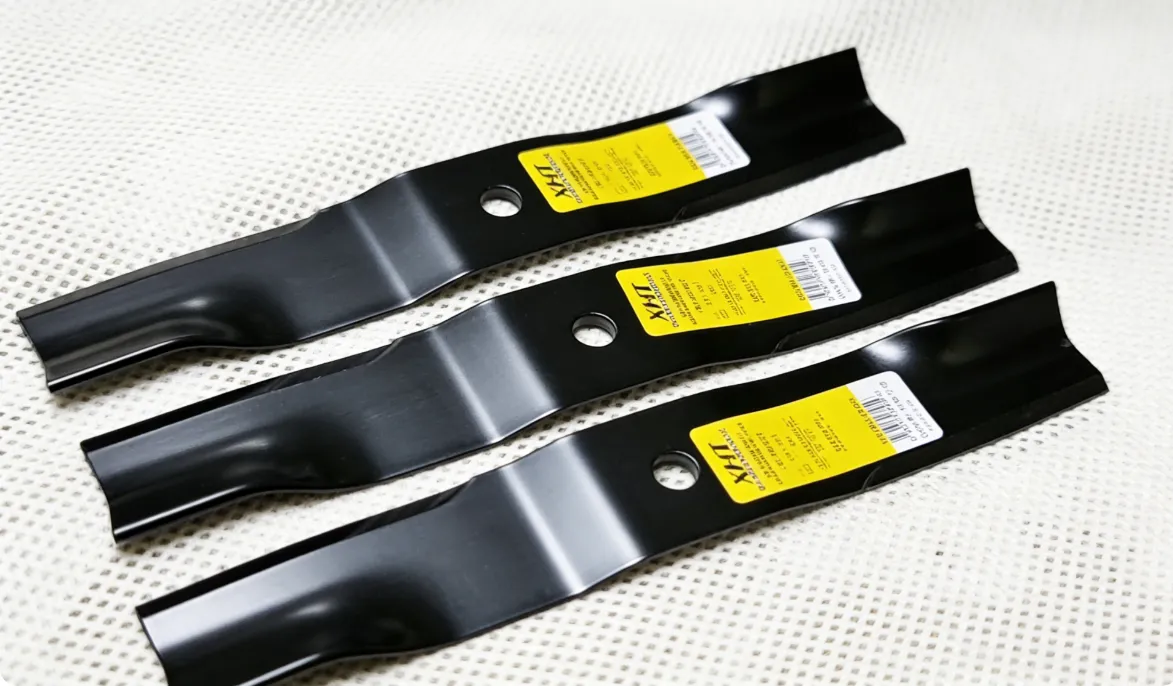
Standard rotary mower blades — the straight or slightly curved blades used in belly mowers, finish mowers, and compact utility mower decks — are sharpened at 25–30 degrees from the blade face. This angle produces a durable cutting edge that handles the occasional soil and stone contact inherent in low-cutting applications while maintaining a sharp enough edge to produce a clean cut on grass. Sharpening at less than 25 degrees produces a sharper initial edge but one that dulls very quickly from soil contact. Sharpening at more than 35 degrees produces an edge that lasts longer in rocky conditions but cuts more by tearing than shearing, reducing cut quality.
Rotary cutter (brush hog) blades
Heavy-duty rotary cutter blades used in brush cutting and rough vegetation clearing applications are typically sharpened at 30–45 degrees from the blade face — a more obtuse angle than finish mower blades. The steeper angle produces a more robust edge that tolerates the rock impacts, woody material contact, and dirt ingestion that are routine in brush-clearing work. A fine 25-degree edge on a rotary cutter blade will chip and roll within the first few minutes of heavy brush work. The trade-off is that the steeper angle cuts with more tearing action — acceptable in rough vegetation clearing where cut quality is not a priority.
Flail mower hammers and Y-blades
Flail mower blades — hammer blades, Y-blades, and similar swinging elements — operate at a different geometry to rotary blades and are sharpened differently depending on their design. Hammer blades that impact and shred vegetation are resharpened at the contact face at 45–60 degrees — a steep chisel angle that produces a durable impact edge rather than a fine cutting edge. Y-blades and blade-type flails that cut by shearing are sharpened at the cutting edge at 25–35 degrees, similar to rotary blades. Identify whether your flail element is a hammer or blade type before sharpening — applying a fine sharpening angle to a hammer blade wastes time and produces an edge that cannot survive the impact loads of flail operation.
| Blade Type | Sharpening Angle | Edge Type | Solicitud |
|---|---|---|---|
| Finish mower blade | 25–30° | Sharp shear | Lawn, turf, managed pasture |
| Rotary cutter (brush hog) | 30–45° | Robust shear | Brush clearing, rough vegetation |
| Flail Y-blade | 25–35° | Shear cutting | Light vegetation, ditches |
| Flail hammer blade | 45–60° | Impact chisel | Mulching, woody debris |
How to Maintain the Correct Angle During Sharpening
The most reliable method for maintaining consistent angle during grinding is to use a guide block or jig that registers the blade flat against a reference face at the target angle. Freehand grinding against a bench grinder produces inconsistent angles between sharpening sessions and often produces a convex bevel rather than the flat bevel that delivers consistent cutting geometry. An angle grinder with a grinding disc is the most common field sharpening tool — hold the disc at the target angle to the blade face and grind along the full length of the cutting edge in smooth, even strokes, checking the angle against a protractor or angle gauge every few strokes.
After sharpening, balance the blade before reinstalling — an unbalanced blade produces vibration that damages spindle bearings and deck structure. For replacement blades when sharpening is no longer effective, browse our mower blade catalog for rotary, finish mower, and flail mower replacement options.
Replacement Mower Blades When Sharpening Is No Longer Effective
PRR Tractor Part stocks rotary, finish mower, and flail mower replacement blades for major implement brands. Provide your blade length, center hole pattern, and blade thickness for a confirmed match.
Frequently Asked Questions
Replacement Mower Blades for Major Implement Brands
Rotary, finish mower, and flail mower blades — provide your implement brand, blade length, and center hole pattern for a confirmed replacement.
PRR Tractor Part Limited Partnership | [email protected]
304/1170 Soi Phahonyothin 49/1, intersección 6, subdistrito de Talat Bang Khen, distrito de Lak Si