
Mô tả sản phẩm
Mô tả sản phẩm
HangZhou ACES là nhà sản xuất OEM chuyên nghiệp với kinh nghiệm sâu rộng trong lĩnh vực đúc cát, đúc trọng lực, đúc khuôn, gia công CNC và xử lý bề mặt, đặc biệt là đáp ứng các yêu cầu xử lý bề mặt khắt khe.
| Vật liệu | GB | ISO | EN | DIN | AA |
| Al-Si(Mg) | ZAlSi7Mg | AlSi7Mg(Fe) | EN AC-42100 | AlSi7Mg | 356 |
| ZAlSi7MgA | AlSi7Mg | EN AC-42100 | AlSi7Mg 3.2371 |
A356.0 | |
| ZAlSi12 | AlSi12 | EN AC-44100 | AlSi12 3.2581 |
413 B413.0 |
|
| ZAlSi9Mg | AlSi10Mg | EN AC-43300 | AlSi9Mg 3.2373 |
360 | |
| Al-Si-Cu (Mg, Ni) |
ZAlSi5Cu1MgA | AlSi5Cu1Mg | EN AC-45300 | AlSi5(Cu) 3.21.34 |
355 |
| ZAlSi7Cu4 | AlSi6Cu4 | EN AC-4500 | AlSi6Cu4 3.2151 |
319 | |
| ZalSi9Cu2Mg | – | EN AC-46200 | – | 354 | |
| AlSi7Mg1A | – | EN AC-42100 | – | A357.0 D357.0 |
| Vật liệu | GB | ASTM | EN | DIN | ISO |
| Sắt xám | HT150 | A48 CL20B | EN-GJL-15 | GG15 | Cr.15 |
| HT200 | A48 CL25B | EN-GJL-20 | GG20 | Cr.20 | |
| HT250 | A48 CL35B | EN-GJL-25 | GG25 | Cr.25 | |
| HT300 | A48 CL45B /50B | EN-GJL-30 | GG30 | Cr.30 | |
| HT350 | A48 CL55B | EN-GJL-35 | GG35 | Cr.35 | |
| Gang dẻo | QT400-18 | A536 60-40-18 | EN-GJS-400-18 | GGG40.3 | Cr.400-18 |
| QT450-10 | A536 60-45-12 | EN-GJS-450-10 | Cr.450-10 | ||
| QT500-7 | A536 70-50-05 | EN-GJS-500-7 | GGG50 | Cr.500-7 | |
| QT600-3 | A536 80-55-06 | EN-GJS-600-3 | GGG60 | Cr.600-3 | |
| QT700-2 | A536 100-70-03 | EN-GJS-700-2 | GGG70 | Cr.700-2 | |
| QT800-2 | A536 120-90-02 | EN-GJS-800-2 | GGG80 | Cr.800-2 |
Giới thiệu về công ty
HangZhou ACES là nhà sản xuất OEM, chủ yếu chuyên về các bộ phận đúc, các bộ phận gia công CNC và các bộ phận dập kim loại tấm. Chúng tôi có nhiều kinh nghiệm trong sản xuất và xuất khẩu các bộ phận kim loại, không chỉ sản xuất các bộ phận OEM mà còn có đội ngũ chuyên nghiệp cho ODM.
Đối với các chi tiết đúc, ACES sở hữu các thiết bị kiểm tra hóa học và vật lý nội bộ như máy phân tích cacbon-silicon, máy quang phổ, máy thử độ căng vạn năng hiển thị kỹ thuật số, lò cảm ứng và lò điện trở. Thiết bị đúc khuôn có tải trọng từ 180 tấn đến 900 tấn. Các quy trình đúc chính bao gồm đúc cát cho các chi tiết bằng sắt, nhôm, đồng thau; đúc khuôn cho các chi tiết hợp kim nhôm và hợp kim kẽm; đúc trọng lực và đúc khuôn đầu tư cho các chi tiết bằng nhôm, hợp kim magie, đồng, thép và các kim loại khác.
Bên cạnh việc đúc, ACES còn cung cấp cho khách hàng các dịch vụ toàn diện hơn. Các thiết bị gia công đa dạng đáp ứng các yêu cầu gia công chính xác khác nhau, chẳng hạn như máy tiện NC, máy tiện tự động chính xác CNC, máy CNC đứng, trung tâm gia công CNC nằm ngang, máy khắc CNC, trung tâm gia công CNC 4 trục và 5 trục. Từ khâu phát triển mẫu đến sản xuất hàng loạt, chất lượng được kiểm soát nghiêm ngặt từ từng công nhân đến đội ngũ kiểm tra chuyên nghiệp. Các công cụ kiểm soát chất lượng như kiểm tra CMM, sơ đồ quy trình, kế hoạch kiểm soát, phân tích PPAP và CPK cũng được sử dụng rộng rãi trong xưởng của chúng tôi.
Tạo ra giá trị tốt nhất cho mỗi khách hàng là mục tiêu không ngừng theo đuổi của chúng tôi. Chất lượng cao, giao hàng đúng hạn và dịch vụ xuất sắc là những yếu tố then chốt trong quản lý của chúng tôi. Dựa trên đội ngũ chuyên nghiệp, ACES sẽ cung cấp cho bạn dịch vụ OEM gia công kim loại trọn gói, từ đúc thô đến gia công cơ khí, dập khuôn và các phương pháp xử lý bề mặt khác nhau. Vui lòng liên hệ với chúng tôi nếu bạn có bất kỳ yêu cầu nào.
Rất mong được trở thành một trong những đối tác lâu dài của bạn.
Đóng gói & Vận chuyển
Trong quá trình phát triển mẫu, ACES luôn thiết kế bao bì phù hợp cho từng bộ phận dựa trên cấu trúc bộ phận, số lượng mỗi lô và yêu cầu của khách hàng.
Câu hỏi thường gặp
Mechanical advantages of pulleys
A pulley is a mechanical device used to transmit motion. The device has a variety of uses, including lifting heavy objects. In this article, we will discuss the mechanical advantages, types, common uses and safety considerations of pulleys. We’ll also discuss how to identify pulleys and their components, and what to look out for when using pulleys. Read on to learn more about pulleys.
Mechanical advantages of pulleys
The mechanical advantage of pulleys is that they change the direction of force from 1 direction to another. In this way, the person lifting the heavy object can change its position with minimal effort. The pulleys are also easy to install and require no lubrication after installation. They are also relatively cheap. Combinations of pulleys and cables can be used to change the direction of the load.
The mechanical advantage of a pulley system increases with the number of ropes used in the system. The more cycles a system has, the more efficient it is. If the system had only 1 rope, the force required to pull the weight would be equal. By adding a second rope, the effort required to pull the weight is reduced. This increase in efficiency is known as the mechanical advantage of the pulley.
Pulleys have many uses. For example, ziplines are 1 application. This is a good example of pulleys in use today. Pulley systems can be complex and require a lot of space. Using ziplines as an example, advanced students can calculate the mechanical advantage of multiple pulleys by dividing the work done by each pulley by the remainder or fraction. Regents at the University of Colorado created a zipline with K-12 input.
Another use for pulleys is weight lifting. This technique is very effective when using multiple strands of rope. A single rope going from 1 pulley to the other with just 2 hands is not enough to lift heavy objects. Using a pulley system will greatly increase the force you receive. This power is multiplied over a larger area. So your lifting force will be much greater than the force exerted by a single rope.
The pulley is a great invention with many uses. For example, when lifting heavy objects, pulleys are a great way to get the job done, and it’s easier to do than 1 person. The pulley is fixed on a hinge and rotates on a shaft or shaft. Then pull the rope down to lift the object. A pulley assembly will make the task easier. In addition, it will also allow power to be transferred from 1 rotary shaft to another.
Các loại ròng rọc
If you are an engineer, you must have come across different types of pulleys. Some pulleys come in multiple types, but a typical pulley has only 1 type. These types of pulleys are used in various industrial processes. Here are some common types of pulleys that engineers encounter on the job. In addition to the above, there are many more. If you haven’t seen them in practice, you can check out a list of the different types below.
Fixed pulleys: Fixed pulleys have a roller attached to a fixed point. The force required to pull the load through the fixed pulley is the same as the force required to lift the object. Movable pulleys allow you to change the direction of the force, for example, by moving it laterally. Likewise, movable pulleys can be used to move heavy objects up and down. Commonly used in multi-purpose elevators, cranes and weight lifters.
Composite pulleys combine fixed and movable pulleys. This combination adds to the mechanical advantage of both systems. It can also change the direction of the force, making it easier to handle large loads. This article discusses the different types of pulleys used for lifting and moving. Braided pulleys are an example of these pulleys. They combine the advantages of both types.
A simple pulley consists of 1 or more wheels, which allow it to reverse the direction of the force used to lift the load. On the other hand, dual-wheel pulleys can help lift twice the weight. By combining multiple materials into 1 pulley, a higher ME will be required. Regardless of the type of pulley, understanding the principles behind it is critical.
Pulleys are an important part of construction and mechanical engineering, and their use dates back to Archimedes. They are a common feature of oil derricks and escalators. The main use of pulleys is to move heavy objects such as boats. In addition to this, they are used in other applications such as extending ladders and lifting heavy objects. The pulley also controls the aircraft rudder, which is important in many different applications.
Commonly used
Common uses for pulleys are varied. Pulley systems are found throughout most areas of the house, from adjustable clotheslines to motor pulleys in different machines. Commercially, 1 of the most common uses is for cranes. Cranes are equipped with pulleys to lift heavy objects. It is also common to use pulley systems in tall buildings, which allow tall buildings to move with relative ease.
Pulleys are commonly used in interception and zipline systems, where a continuous rope around the pulley transmits force. Depending on the application, the rope is either light or strong. Pulleys are formed by wrapping a rope around a set of wheels. The rope pulls the object in the direction of the applied force. Some elevators use this system. Pull a cable on 1 end and attach a counterweight on the other end.
Another common use for pulleys is to move heavy objects. Pulleys mounted on walls, ceilings or other objects can lift heavy objects like heavy toolboxes or 2×4 planks. The device can also be used to transfer power from 1 rotating shaft to another. When used to lift heavy objects, pulleys can be used to help you achieve your goals of a good workout.
Pulley systems have a variety of uses, from the most basic to the most advanced. Its popularity is indisputable and it is used in different industries. A good example is timing belts. These pulleys transmit power to other components in the same direction. They can also be static or dynamic depending on the needs of the machine. In most cases, the pulley system is custom made for the job.
Pulley systems can be simple or complex, but all 3 systems transfer energy efficiently. In most cases, the mechanical advantage of a single pulley is 1 and the mechanical advantage of a single active pulley is 2. On the other hand, a single live pulley only doubles the force. This means you can trade effort for distance. Pulleys are the perfect solution for many common applications.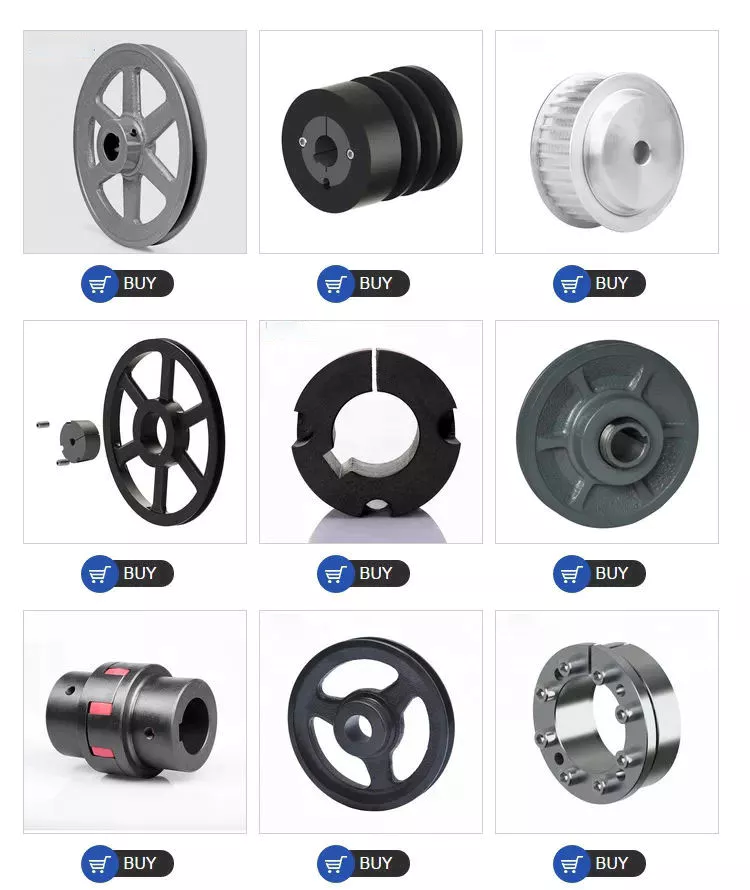
Safety Notice
If you use pulleys, you need to take some safety precautions. First, make sure you’re wearing the correct protective gear. A hard hat is a must to avoid being hit by falling objects. You may also want to wear gloves for added protection. You should also maintain a good distance from the pulley so that nearby people can walk around it safely.
Another important safety measure to take before using a chain hoist is to barricade the area to be lifted. Use marker lines to prevent the load from sliding when moving horizontally. Finally, use only the sprocket set for vertical lift. Always install shackle pins before lifting. You should also wear personal protective equipment such as earplugs and safety glasses when using the chain hoist.
In addition to these safety measures, you should also use cables made from aerospace-grade nylon. They will last many cycles and are made of high quality materials. Also, make sure the cables are lubricated. These measures reduce friction and corrosion. No matter what industry you are in, be sure to follow these precautions to ensure a long service life for your cables. Consult the cable manufacturer if you are unsure of the appropriate material. A company with 60 years of experience in the cable industry can recommend the right material for your system.