
Description du produit
The Pump Drives (Hydraulic pump Drives) is a gearbox allowing the connection between a prime mover (internal combustion engine or electric motor for example) and 1 or more hydraulic pumps. Usually it is used on both stationary and mobile application where mechanical power must be converted into hydraulic power for the purpose of operating travel functions and services.
The hydraulic pumps drives gearboxes consist of a gear drive inside a CHINAMFG housing that connects to a gasoline or diesel engine. The opposite side contains 1 or more standard 2- or 4-bolt flanges for mounting hydraulic pumps. This configuration provides several benefits. For one, 2 or more identical pumps can be connected to provide nearly identical hydraulic output flow from each. Or different sized pumps can be used provide output flow proportional to the displacement of each pump.These gearboxes not only saves space and weight but also eliminates the number of components and reduces assembly time for the whole machinery. Our modular pump drives could allow driving 2 to 4 pumps simultaneously. This not only offers design flexibility, but can boost system efficiency as well.
| Modèle | 2 pumps drive | 3 pumps drive | 4 pumps drive | |||||||
| Paramètre | KK190-2N | KK400-2N | KK530-2N | KK700-2N | KK280-3N | KK400-3N | KK530-3N | KK700-3N | KK530-4N | KK700-4N |
| Puissance d'entrée maximale (KW) | 190 | 400 | 530 | 700 | 280 | 400 | 530 | 700 | 530 | 700 |
| Puissance de sortie maximale par plaque de pompe (KW) | 110 | 210 | 270 | 360 | 150 | 210 | 270 | 360 | 270 | 330 |
| Couple de sortie maximal par patin de pompe (Nm) | 400 | 900 | 1500 | 1900 | 800 | 900 | 1500 | 1900 | 1500 | 1800 |
| Vitesse d'entrée maximale (tr/min) | 2800 | 2600 | 2600 | 2400 | 2800 | 2600 | 2600 | 2400 | 2600 | 2400 |
| Vitesse de sortie maximale (tr/min) | 3200 | 2800 | 2800 | 2700 | 3200 | 2800 | 2800 | 2700 | 2800 | 2700 |
| Rapport de transmission | 0.74/0.81/0.89/0.98··· | 0.67/0.74/0.81/0.89/0.98··· | 0.67/0.74/0.81/0.89/0.98··· | 0.67/0.74/0.81/0.89/0.98··· | 0.74/0.81/0.89/0.98··· | 0.67/0.74/0.81/0.89/0.98··· | 0.67/0.74/0.81/0.89/0.98··· | 0.67/0.74/0.81/0.89/0.98··· | 0.67/0.74/0.81/0.89/0.98··· | 0.67/0.74/0.81/0.89/0.98··· |
| Dimensions du support du moteur principal | SAE #3 #4 etc. | SAE #2 #3 etc. | SAE #1 #2 #3 etc. | SAE #0 #1 #2 etc. | SAE #3 #4 etc. | SAE #2 #3 etc. | SAE #1 #2 #3 etc. | SAE #0 #1 #2 etc. | SAE #1 #2 #3 etc. | SAE #1 #2 etc. |
| Dimensionnement de l'orifice d'une pompe simple | Bride SAE A, B, C, etc. | Bride SAE A, B, C, D, etc. | Bride SAE B, C, D, E, etc. | Bride SAE C, D, E, etc. | Bride SAE A, B, C, etc. | Bride SAE A, B, C, D, etc. | Bride SAE B, C, D, E, etc. | Bride SAE C, D, E, etc. | Bride SAE B, C, D, E, etc. | Bride SAE BC,D, etc. |
| Matériau du boîtier | Fonte | Fonte | Fonte | Fonte | Fonte | Fonte | Fonte | Fonte | Fonte | Fonte |
/* 10 mars 2571 17:59:20 */!function(){function s(e,r){var a,o={};try{e&&e.split(“,”).forEach(function(e,t){e&&(a=e.match(/(.*?):(.*)$/))&&1
| Application: | Machines, machines agricoles |
|---|---|
| Fonction: | Puissance distribuée, changement de vitesse, réduction de vitesse, augmentation de vitesse |
| Installation: | Type horizontal |
| Taper: | Cylindrical Gear Box |
| Product Name: | Hydraulic Pump Drive |
| Conditon: | New |
| Exemples : |
US$ 4990/Piece
1 pièce (commande minimale) | |
|---|
| Personnalisation : |
Disponible
| Demande personnalisée |
|---|
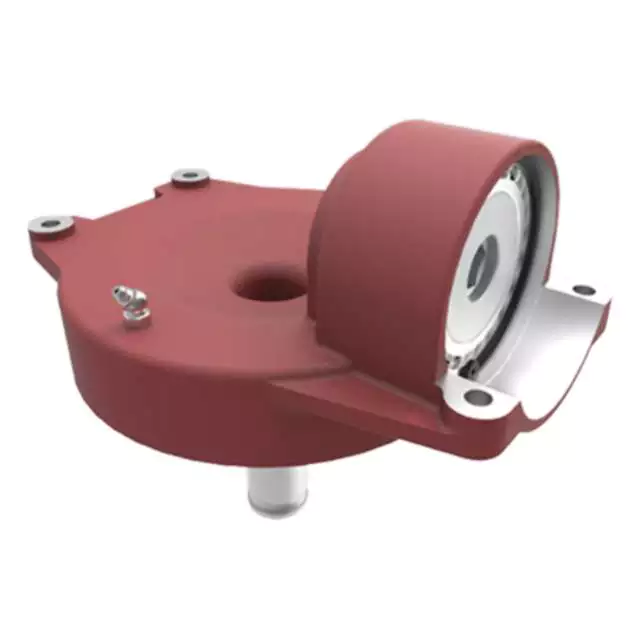
Impact of Gear Ratios on Machinery Performance in Agricultural Gearboxes
The gear ratio in agricultural gearboxes plays a crucial role in determining the performance of machinery. It directly affects the relationship between the input and output speeds and torques. Here’s how gear ratios influence machinery performance:
- Speed and Torque Conversion: Gear ratios allow for the conversion of speed and torque between the input and output shafts. Higher gear ratios can reduce output speed while increasing output torque, making it suitable for tasks requiring high power.
- Power and Efficiency: Gear ratios affect the efficiency of power transmission. While reducing the speed through higher gear ratios can increase torque, it’s essential to strike a balance to maintain efficiency. Lower efficiency can lead to energy loss and increased heat generation.
- Task Adaptability: Different agricultural tasks require varying levels of torque and speed. Gear ratios enable machinery to be adaptable to different tasks by providing the necessary torque for heavy-duty activities like plowing or tilling and higher speeds for tasks like transport.
- Optimal Performance: Selecting the appropriate gear ratio ensures that machinery operates within its optimal performance range. It prevents overloading the engine or the gearbox, contributing to smoother operation and reduced wear and tear.
- Productivity and Fuel Efficiency: Proper gear ratios can enhance the overall productivity of agricultural machinery. By optimizing torque and speed, tasks can be completed efficiently, reducing the time and fuel consumption required for operations.
- Consideration of Terrain: Different terrains and field conditions require adjustments in gear ratios. Steep slopes or heavy soil may necessitate lower gear ratios for increased torque, while flat terrain could benefit from higher ratios for faster operation.
- Impact on Components: Gear ratios can influence the load distribution on gearbox components. Higher gear ratios might subject components to increased forces and stresses, potentially affecting their lifespan.
- Operator Comfort: Proper gear ratios contribute to operator comfort by providing the necessary power for smooth operation without straining the machinery. This can lead to reduced operator fatigue and improved safety.
- Personnalisation : Some modern agricultural equipment offers adjustable or variable gear ratios, allowing operators to fine-tune machinery performance based on specific tasks and conditions.
Choosing the right gear ratio for agricultural gearboxes involves considering factors such as the intended task, soil conditions, and equipment specifications. It’s essential to strike a balance between torque and speed to achieve optimal machinery performance and maximize productivity.
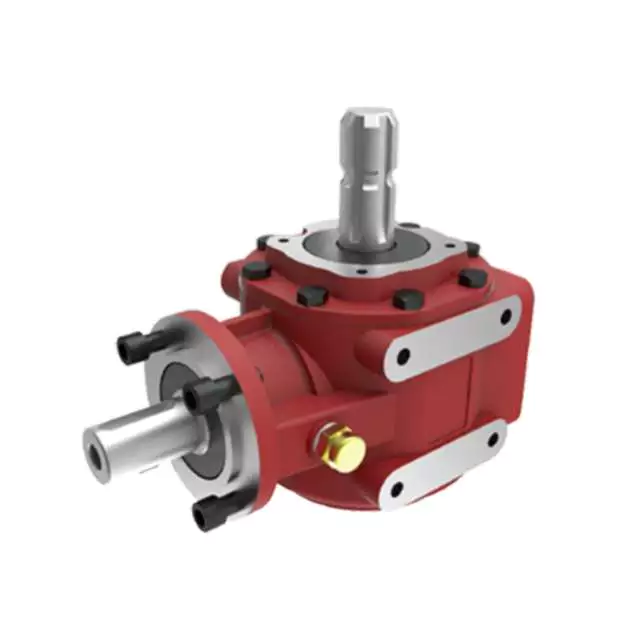
Enhancing Efficiency and Productivity in Farming Operations with Agricultural Gearboxes
Agricultural gearboxes play a pivotal role in enhancing efficiency and productivity across various farming operations. Here’s how agricultural gearboxes contribute to improving farming practices:
- Transmission de puissance : Agricultural gearboxes efficiently transmit power from the tractor’s engine to various implements, enabling them to perform tasks like plowing, planting, and harvesting with optimal power and torque.
- Variable Speed Control: Gearboxes allow farmers to adjust the speed of attached implements, adapting to different soil types, crop conditions, and tasks. This flexibility ensures precision and optimal performance.
- Task Specialization: With the use of different attachments and implements, one tractor equipped with a gearbox can perform a variety of tasks, reducing the need for multiple specialized machines.
- Optimized Torque: Agricultural gearboxes provide the necessary torque to overcome resistance from tough soils, vegetation, and other challenging conditions, ensuring consistent and efficient operations.
- Improved Crop Management: Gearboxes enable precise control over seeding depth, planting spacing, and fertilization, contributing to better crop management and higher yields.
- Reduced Operator Fatigue: Efficient power transmission and controlled operations reduce the physical strain on operators, enabling them to work longer hours without excessive fatigue.
- Conservation of Resources: By allowing accurate distribution of seeds, fertilizers, and other inputs, gearboxes help conserve resources and minimize waste.
- Enhanced Harvesting: Gearboxes facilitate smooth operation of harvesting equipment, such as combines and forage harvesters, resulting in efficient gathering of crops without damage.
- Time and Labor Savings: Agricultural gearboxes speed up tasks like plowing, tilling, and planting, enabling farmers to cover larger areas in less time, which is particularly crucial during planting and harvesting seasons.
- Fiabilité et durabilité : Well-designed gearboxes are built to withstand the rigors of farming environments, reducing downtime due to maintenance or equipment failure.
Incorporating agricultural gearboxes into farming equipment significantly contributes to streamlining operations, reducing manual effort, and optimizing the use of resources. As a result, farmers can achieve higher levels of efficiency, productivity, and overall farm profitability.
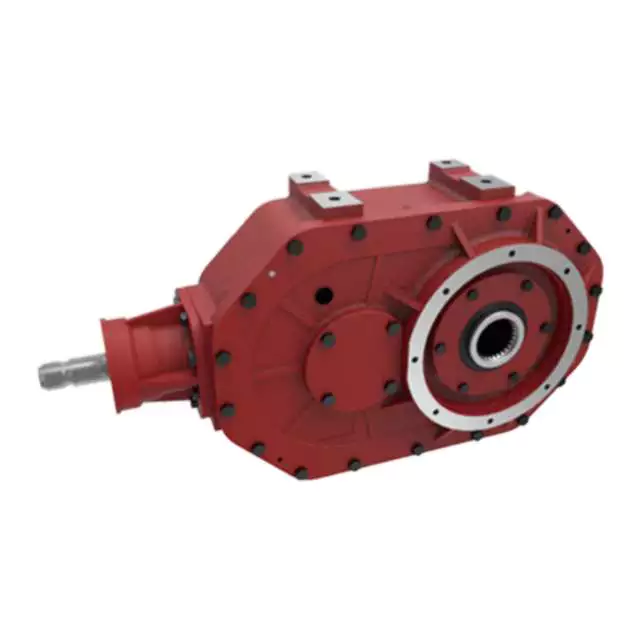
Transmission de puissance dans les équipements agricoles avec boîtes de vitesses agricoles
Les boîtes de vitesses agricoles jouent un rôle essentiel dans la transmission de puissance au sein de divers équipements agricoles. Ces composants indispensables permettent de transférer la puissance de rotation du moteur du tracteur aux différents outils et machines agricoles. Voici comment les boîtes de vitesses agricoles contribuent à la transmission de puissance :
- Réduction de vitesse : Dans de nombreuses exploitations agricoles, le moteur d'un tracteur ou d'une autre source d'énergie tourne à un régime supérieur à celui nécessaire au fonctionnement optimal des outils agricoles. Les réducteurs agricoles permettent de réduire la vitesse grâce à une combinaison d'engrenages à denture différente. Cette réduction de vitesse permet à la machine de fonctionner à la vitesse requise pour des tâches efficaces telles que le labour, les semis ou la récolte.
- Multiplication de la puissance : Certaines tâches agricoles nécessitent un couple important pour être réalisées efficacement. Les boîtes de vitesses peuvent multiplier le couple d'entrée du moteur afin de générer un couple plus élevé à l'arbre de sortie. Ceci est crucial pour des opérations comme le labour, où une force considérable est nécessaire pour ameublir le sol.
- Changement de direction : Les boîtes de vitesses agricoles permettent également de modifier le sens de transmission de la puissance. Par exemple, l'arbre de prise de force (PDF) d'un tracteur peut avoir besoin de transmettre la puissance perpendiculairement au moteur. Les boîtes de vitesses à engrenages coniques ou autres dispositifs similaires permettent ce changement de sens, garantissant ainsi une transmission optimale de la puissance à l'outil.
- Distribution de l'énergie : Dans certains cas, il est nécessaire de répartir la puissance entre plusieurs composants ou outils. Les réducteurs agricoles à plusieurs arbres de sortie permettent de distribuer simultanément la puissance à différentes tâches, optimisant ainsi l'efficacité et la productivité.
- Opération de fixation : De nombreux outils agricoles, tels que les charrues, les semoirs et les faucheuses rotatives, nécessitent une puissance constante et maîtrisée pour fonctionner efficacement. Les réducteurs fournissent la puissance et la maîtrise nécessaires à ces équipements, garantissant ainsi un fonctionnement uniforme et des résultats précis.
En facilitant la réduction de vitesse, la multiplication de la puissance, les changements de direction, la distribution de la puissance et l'utilisation des accessoires, les réducteurs agricoles contribuent significativement à l'efficacité et à la productivité globales du matériel agricole. Ils permettent aux agriculteurs d'adapter leurs machines à diverses tâches, d'optimiser la consommation d'énergie et d'obtenir de meilleurs résultats dans différentes opérations agricoles.


editor by CX 2024-01-10