
Product Parameters
The driveline transmission shaft in tractors, such as those from Kubota, is a vital component designed to transfer power efficiently from the engine to the wheels or implements, with specifications tailored for robustness in agricultural applications. Precise parameters ensure optimal performance and facilitate accurate fault diagnosis and repair, preventing escalation of issues like vibrations or power loss. The following table details parameters for a standard Kubota transmission shaft, based on models like the M series (e.g., M7060), where a 1-3/8 inch spline diameter with 6 splines supports 540 RPM operations, and torque capacities reach up to 500 Nm for heavy-duty tasks. These metrics, drawn from Kubota’s technical documentation, allow technicians to measure deviations using tools such as dial indicators or torque testers, identifying wear that necessitates repairs. For example, the shaft’s length tolerances of ±2 mm ensure proper alignment, addressing common misalignment faults that cause excessive bearing wear. In high-load scenarios, the material’s yield strength of 600 MPa resists bending, solving problems in rough terrains where overloading is frequent. By referencing these parameters during inspections, users can detect early signs of faults like spline erosion or joint failure, enabling targeted repairs that restore functionality. This approach minimizes downtime, enhances safety by reducing the risk of shaft breakage, and aligns with maintenance best practices for prolonged equipment life. Furthermore, compatibility with Kubota’s proprietary designs ensures that replacement parts integrate seamlessly, avoiding compounded issues from mismatched components.
| Parameter | Value |
|---|---|
| Shaft Diameter (Spline) | 1-3/8 inches (34.9 mm) |
| Number of Splines | 6 |
| Overall Length | 1,200 mm (model-dependent) |
| Torque Capacity | Up to 500 Nm |
| Material Yield Strength | 600 MPa |
| Operating Speed | 540 RPM |
| Bending Tolerance | ±0.5 mm |
| Compatibility | Kubota M, L Series |
| Surface Hardness | 55-60 HRC |
Introduction to Tractor Driveline Transmission Shafts
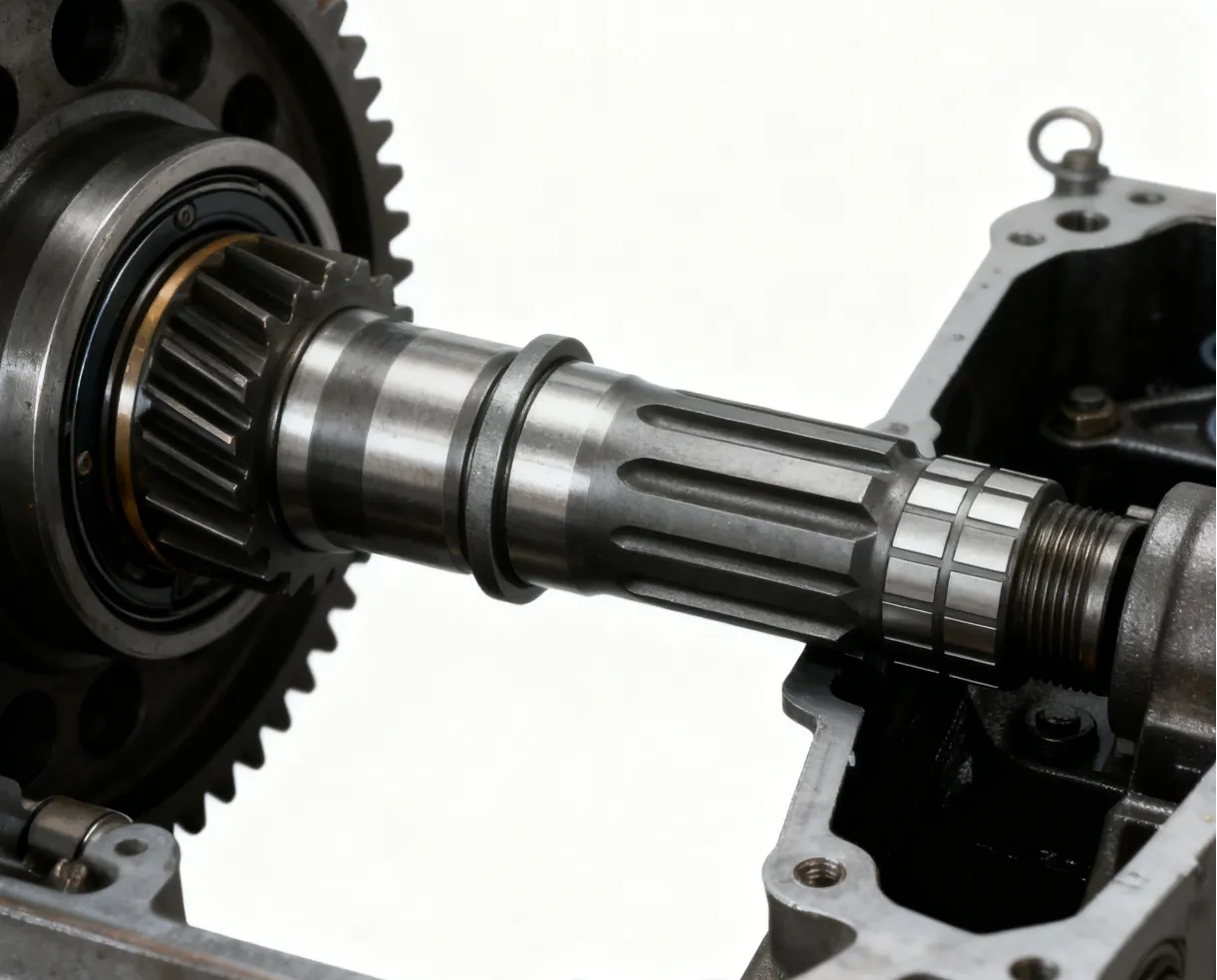
The driveline transmission shaft in tractors serves as a critical conduit for power transfer from the engine through the gearbox to the drivetrain, enabling propulsion and implement operation. In Kubota models, it typically incorporates splined ends, universal joints, and protective tubing to handle torque while accommodating angular and axial movements. Its primary function is to maintain efficient energy delivery under varying loads, ensuring smooth vehicle performance in agricultural tasks such as plowing or towing. Common faults, including spline wear, joint seizure, or shaft bending, arise from prolonged exposure to stress, inadequate lubrication, or environmental factors, leading to symptoms like vibrations, noise, or reduced power output.
Addressing these faults through systematic repairs resolves real-world issues by restoring operational integrity and preventing secondary damage to connected components like differentials or axles. Technically, repairs begin with diagnostic steps, such as visual inspections for cracks or using alignment tools to check for bends exceeding tolerances. For instance, spline wear, often caused by abrasive contaminants, can be repaired by resurfacing or replacing affected sections, ensuring precise torque transmission. Joint failures, indicated by excessive play, require disassembly, cleaning, and regreasing with high-pressure lubricants to eliminate binding. In severe cases, full shaft replacement with OEM-compatible parts mitigates risks of recurrent issues. By employing torque wrenches during reassembly to meet specified Nm values, technicians achieve balanced load distribution, enhancing durability. This technical methodology not only solves immediate malfunctions but also incorporates preventive measures, such as installing guards to shield against debris, ultimately supporting reliable tractor use in demanding conditions and optimizing maintenance cycles for cost efficiency.
Key Components of Tractor Transmission Shafts and Repair Methods
The transmission shaft comprises several interconnected components, each susceptible to specific faults that can impair driveline performance in Kubota tractors. Understanding these elements and their repair techniques is essential for effective troubleshooting and restoration of functionality.
Essential Components and Common Faults
– Splines: These grooved interfaces connect the shaft to hubs or yokes, transmitting torque precisely. Faults like erosion or stripping occur from overload or poor alignment, causing slippage; repair involves measuring wear with micrometers and machining new splines or replacing the section if depth loss exceeds 0.2 mm.
– Universal Joints (U-Joints): Allowing angular flexibility, U-Joints consist of crosses and bearings that enable smooth rotation. Common issues include bearing wear or seizure from insufficient grease, leading to vibrations; repairs entail disassembly, replacement of worn needles, and regreasing to restore articulation up to 30 degrees.
– Shaft Tubing: The main body provides structural support and houses telescoping sections for length adjustment. Bending or cracking faults arise from impacts; straightening with hydraulic presses or welding reinforcements addresses minor deformations, while severe cases require full tube replacement to maintain balance.
– Yokes and Couplings: Securing ends to drivetrain parts, these ensure stable connections. Faults such as cracking from fatigue necessitate inspection for hairline fractures and replacement with forged steel alternatives for enhanced strength.
Repair Techniques and Best Practices
Repairs should follow a step-by-step process: isolate the fault via symptom analysis (e.g., noise under load indicates joint issues), disassemble using appropriate tools like snap-ring pliers, and reassemble with torque specifications to prevent recurrence. Balancing the shaft post-repair using dynamic balancers eliminates vibrations, solving efficiency losses.
Product Comparisons and Recommendations
Compared to competitors, Kubota transmission shafts offer superior spline precision and material hardness, outperforming John Deere equivalents in corrosion resistance but at a higher cost, while Massey Ferguson parts provide affordability yet lower torque capacities, making them less ideal for heavy loads. PRR TRACTOR PART LIMITED PARTNERSHIP’s compatible shafts match Kubota quality with enhanced alloys for durability, ensuring seamless integration at competitive prices. Our range includes reinforced U-Joints and splined sections that exceed OEM lifespan in rigorous testing, offering cost-effective solutions without compromising performance.
Discover our high-quality transmission shaft accessories at Transmission Shafts for reliable repairs tailored to your needs.
For more details on our products and expertise, visit our About Us page. To inquire about repairs or purchases, reach us via Contact Us.
FAQ
What are the signs of transmission shaft spline wear?
Symptoms include slippage during acceleration, unusual vibrations, or grinding noises; inspect splines for rounding or pitting to confirm.
How to repair a bent transmission shaft?
Use a dial indicator to measure bend; straighten with a hydraulic press if under 0.5 mm deviation, or replace if severe to avoid vibrations.
What causes U-Joint failure in tractors?
Inadequate lubrication or overload leads to bearing wear; disassemble, clean, and replace components while applying high-grade grease.
Can I weld a cracked shaft yoke?
Yes for minor cracks using MIG welding with compatible filler; ensure post-weld heat treatment to restore strength and balance.
How to balance a repaired transmission shaft?
Mount on a dynamic balancer, spin at operational RPM, and add weights to counter imbalances, reducing vibrations effectively.
What tools are needed for shaft disassembly?
Snap-ring pliers, torque wrenches, and bearing pullers; use them to safely remove and reassemble without damaging parts.
Is it safe to operate with minor shaft faults?
No, as faults can escalate to breakdowns; address promptly to prevent drivetrain damage and ensure operator safety.
How often should I lubricate transmission shafts?
Every 50-100 hours of operation; use EP2 grease on joints to prevent seizure and extend component life.
What is the cost comparison for PRR vs. OEM parts?
PRR offers up to 30% savings with equivalent quality; our shafts provide better value for frequent repairs in demanding use.
Where to buy repair kits for Kubota shafts?
Contact PRR TRACTOR PART LIMITED PARTNERSHIP at [email protected] or visit 304/1170 Soi Phahonyothin 49/1, Intersection 6, Talat Bang Khen Subdistrict, Lak Si District for comprehensive kits.