
A gearbox that runs quietly at idle but makes noise under load is telling you something specific about its internal condition. The load-dependent character of the noise is itself diagnostic — it narrows the cause to components that only carry significant stress when torque is being transmitted: gear tooth surfaces, shaft bearings under radial load, and keys or splines under torsional load. A gearbox that makes noise continuously regardless of load is a different problem with different causes. Knowing which category applies to your gearbox determines where to look first and how urgently the fault needs attention.
This guide covers the five most common causes of load-dependent agricultural gearbox noise, how to identify each from the sound character and operating conditions, and what the diagnosis means for repair urgency and approach.

Five Causes of Load-Dependent Gearbox Noise
Gear tooth pitting occurs when the contact stress at the tooth surface repeatedly exceeds the material’s endurance limit, causing small craters to form at the pitch line. Initially this produces a roughness in the mesh that manifests as a low rumble under load — distinctly different from the no-load sound. As pitting progresses to spalling (larger craters and material loss), the noise intensifies to a grinding or growling character under load and may be accompanied by metal particles visible in the oil at the next oil change. Diagnosis: drain a small sample of gearbox oil and inspect for metallic particles — even fine grey metallic sludge indicates ongoing tooth surface damage. Remedy: if caught early at the pitting stage, reduce load if possible and monitor oil condition at short intervals. At the spalling stage, plan immediate gearbox service before catastrophic tooth fracture occurs.
Bearings that are at an advanced wear stage or that have fatigue damage on their raceways produce a rolling noise that intensifies when load is applied — because load increases the contact force between the rolling element and the damaged raceway. The sound is typically a continuous rumble or growl rather than a knock, and it varies in pitch with shaft speed rather than with individual tooth-mesh frequency. Diagnosis: with the machine running under light load, listen for the noise frequency changing proportionally with engine/PTO speed — if it tracks with speed rather than load level, bearing fatigue is the likely source. Remedy: bearing replacement before raceway spalling causes contamination of the gear mesh or shaft journal damage.
A gear pair with insufficient backlash runs quietly or with slight mesh noise at light load but becomes significantly louder under heavy load as thermal expansion reduces the clearance further. Under full load, gears with too little backlash contact on both flanks simultaneously — a condition called zero-backlash binding — which produces a characteristic harsh whine or scream rather than a rumble. This typically occurs after a gearbox has been reassembled without correct shimming, or when a replacement gear set has been fitted with incorrect shim pack selection. Diagnosis: allow the gearbox to cool completely, then check backlash with a dial indicator. If backlash is below specification at ambient temperature, it will be even less at operating temperature. Remedy: shim adjustment by a qualified technician.
Keys and splines transmit torque between shaft and gear or between shaft and coupling. When there is slight play in the key or spline fit — from wear, from a key that was never an accurate fit, or from fretting that has enlarged the keyway — the key rocks under alternating load, producing a clicking or knocking noise that is strictly load-dependent and changes direction when load is reversed. On drives that run in one direction only, this produces a knock at load application (as the key takes up slack) and a knock at load removal (as it returns). Diagnosis: remove the gear and inspect the keyway for fretting wear (reddish iron oxide powder at the key contact surfaces). Remedy: key and keyway repair or shaft replacement if the keyway is significantly enlarged.
Gear oil provides the hydrodynamic film that prevents metal-to-metal contact at the gear mesh and bearings. When oil level is low, this film is inadequate under high load — the oil cannot be distributed to the tooth contact zone fast enough. When oil is degraded (oxidised, contaminated with water, or past its service interval), the film strength is insufficient even at correct fill level. Both conditions produce load-dependent noise because the lubrication film collapses precisely when load is highest. Diagnosis: check oil level immediately. If level is correct, drain a sample and check for dark colour, emulsification (milky appearance indicating water contamination), or a burnt smell. Remedy: drain and refill with the correct grade of EP gear oil specified for your gearbox.
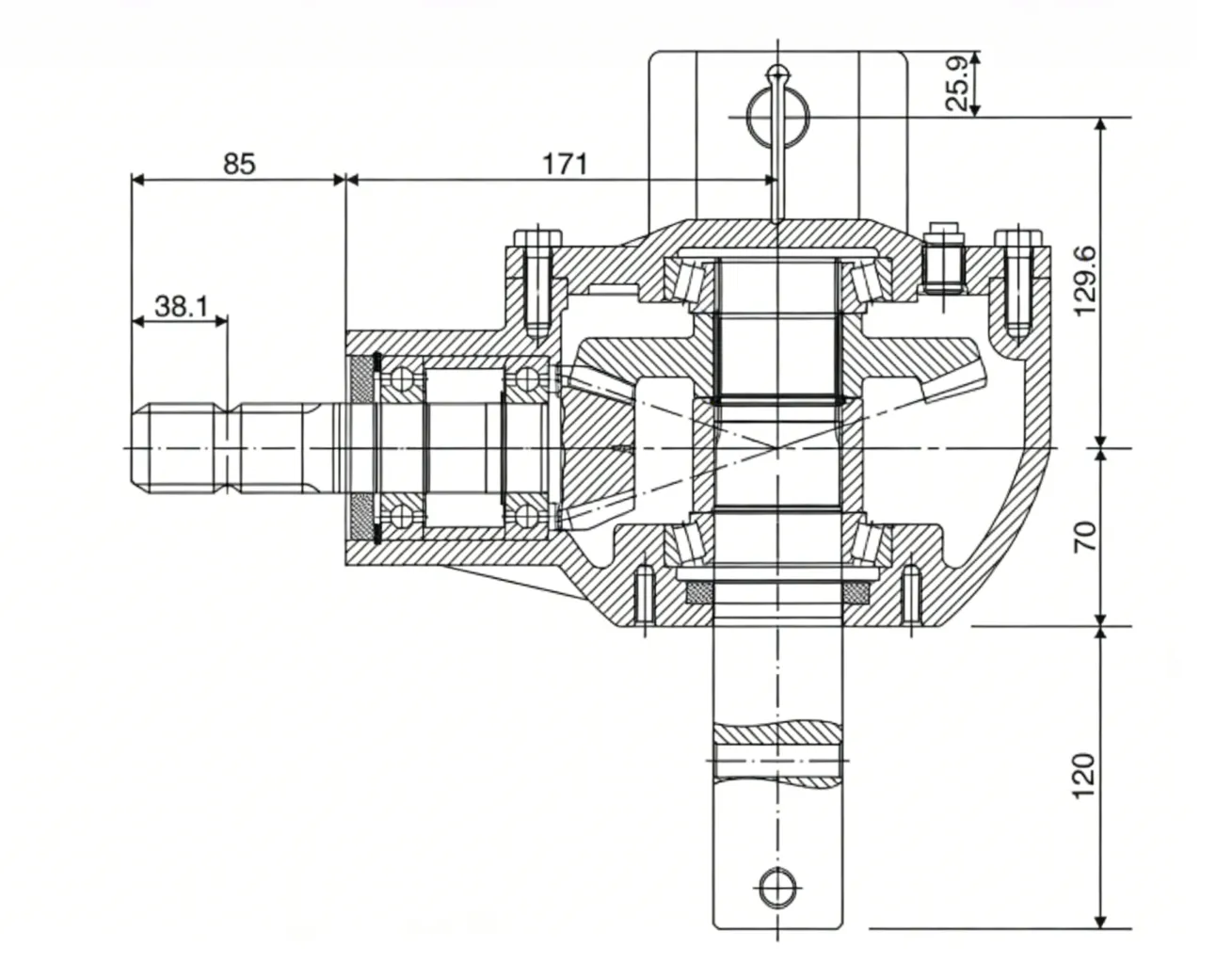
Noise Character to Cause Quick Reference
| Noise Character | En Muhtemel Sebep | Urgency |
|---|---|---|
| Low rumble under load, worsens over months | Gear tooth pitting | Medium — monitor oil |
| Continuous growl, pitch tracks with speed | Bearing fatigue | Medium-high — plan service |
| Harsh whine under heavy load only | Insufficient backlash | High — reduce load |
| Knock at load take-up and release | Key / spline fretting | Medium — inspect key |
| Sudden noise increase, no other change | Low or degraded oil | High — check oil immediately |
For replacement gears, bearings, and complete agricultural gearbox assemblies, browse our tarımsal dişli kutusu kataloğu. Contact [email protected] with your gearbox make, model, and noise description for a diagnosis and parts recommendation.
Agricultural Gearbox Parts and Replacement Units
PRR Tractor Part stocks replacement gears, bearings, seal kits, and complete gearbox units for agricultural applications. Provide your gearbox model and fault description for a targeted recommendation.
Sıkça Sorulan Sorular
Agricultural Gearbox Replacement Parts and Units
Replacement gears, bearings, seal kits, and complete gearbox units for PTO-driven agricultural implements.
PRR Tractor Part Limited Partnership | [email protected]
304/1170 Soi Phahonyothin 49/1, Kavşak 6, Talat Bang Khen Alt Bölgesi, Lak Si Bölgesi