
Produktbeschreibung
2-Axis Professional Custom Rapid Prototyping Custom Service High Density Non-standard CNC Parts for Agricultural Equipment Parts
Produktinformationen
Produktinformationen:
| 1 | Geschäftsart: | Kundenspezifischer CNC-Frässervice (3-Achsen, 4-Achsen, 5-Achsen) Kundenspezifische CNC-Drehdienstleistungen EDM Drahterodieren |
| 2 | Standard: | JIS, ANSI |
| 3 | Produktpalette: | Automobilteile, Zubehör für Windkraftanlagen, ER-Flüssigkeiten, medizinische Geräte und Instrumente, kundenspezifische Standardisierung, Motorradteile, Maschinenteile, Beleuchtungskomponenten, Hardwarezubehör, Elektromotorenprodukte usw. |
| Landwirtschaftliche Maschinen, Elektrogeräte, Möbelbeschläge | ||
| 4 | Materialien: | 1.Edelstahl: SS201, SS303, SS304, SS316 usw. |
| 2.KohlenstoffstahlAISI 1045, 9SMnPb28 usw. | ||
| 3.Messing: C36000 (C26800), C37700 (HPb59), C38500 (HPb58), C27200 (CuZn37), C28000 (CuZn40) usw. | ||
| 4.Bronze:C51000, C52100, C54400 usw. | ||
| 5.EisenGrauguss und duktiles Gusseisen | ||
| 6.Aluminium:6061, 6063,7075,5052 usw. | ||
| 7.MagnesiumlegierungAZ31, AZ61, AZ91 | ||
| 8.PlastikPEEK, POM, NYLON, TEFLON, ABS…etc | ||
| 9.TitanTC4 | ||
| 5 | Bearbeitung: | Drehen, Fräsen, Bohren, Schleifen, Reinigen |
| 6 | Hauptausrüstung | CNC-Drehmaschine, CNC-Fräsmaschine, Stanzmaschine |
| Automatische Drehmaschine, Schleifmaschine, Gewindeschneidmaschine | ||
| Bohrmaschine…usw. | ||
| 7 | Mess- und Prüfgeräte | Koordinatenmessgerät, Profilprojektor, Rockwell-Härteprüfgerät, CZPT-Härteprüfgerät, Rauheitsmessgerät, Mikrometer, Höhenmessgerät, Messschieber… usw. |
| 8 | Genauigkeit: | Bearbeitungsgenauigkeit: +/- 0,005 mm |
| Schleifgenauigkeit: +/- 0,005 mm | ||
| Oberflächenrauheit: Ra0,8 | ||
| Parallelität: +/- 0,005 mm | ||
| Vertikalität: +/- 0,005 mm | ||
| Konzentrizität: 0,003 mm | ||
| 9 | Oberflächenbehandlung: | Polieren, Entgraten, Verchromen, Vernickeln, Verzinken, Versilbern |
| Anodisieren in verschiedenen Farben, Aufkohlen, Nitrieren, Wärmebehandlung usw. | ||
| 10 | Mindestbestellmenge | 1 bis 10000 Stück. |
| 11 | DRW-Format: | DWG, PDF, IGS, STEP, SLDPRT, SLDDRW, PRT, DRW, DXF, X_T usw. |
| 12 | Qualitätskontrollsystem: | 100% Prüfung vor dem Versand |
| 13 | Zertifikat | ISO 9001:2015, SGS-Werksaudit |
| 14 | Zahlungsbedingungen: | 30% T/T + 70% T/T, Western Union, PayPal, L/C |
| 15 | Handelsbedingungen: | FOB, CIF, L/C |
| 16 | Lieferzeit: | 7 bis 45 Tage nach der Bestätigung |
| 17 | Lieferzeit für Muster: | 3-7 Werktage |
| 18 | Transportpaket: | Schaumstoff-/Holzkiste, Rostschutzpapier, kleine Schachteln und Kartons, Paletten… usw. |
| 19 | Herkunft: | China |
| 20 | Unsere Vorteile: | Zuverlässige Qualität |
| Wettbewerbsfähiger Preis | ||
| Hohe Präzision, hohe Qualität, hohe Genauigkeit | ||
| Kontinuierliche Verbesserung | ||
| Fehlerfreie Produkte | ||
| Pünktliche Lieferung | ||
| Kundenzufriedenheit | ||
| Hervorragender Kundendienst |
Produktionsprozess
Unternehmensprofil
JieChen Precision Manufacturing Co., Ltd. ist ein professioneller Hersteller von Präzisionsbearbeitungsteilen. Wir sind spezialisiert auf die Bearbeitung von Präzisionsbearbeitungsteilen, Präzisionswerkzeuge, Vorrichtungen und Lehren sowie die Konstruktion und Fertigung von Automatisierungsanlagen.
Seit ihrer Gründung im Jahr 2012 hat sich die Firma rasant entwickelt. Mittlerweile verfügt sie über eine große Werkstatt und zahlreiche moderne Produktions- und Präzisionsmessgeräte.
Zu den Kunden zählen namhafte internationale Unternehmen in Europa, den USA, Japan, Deutschland, England und dem chinesischen Festland. Das Unternehmen legt großen Wert auf die Entwicklung und Schulung seiner Mitarbeiter und bietet ihnen vielfältige Entwicklungsmöglichkeiten.
Die Produkte deckten die Bereiche Verteidigung, Luft- und Raumfahrt, Elektronik, Medizintechnik, Halbleiter, Automatisierung und weitere Branchen ab. Mit einer breiten Teilevielfalt, hoher Präzision sowie der Möglichkeit zur Fertigung von großen und mittleren Serien erreichte die Produktgenauigkeit 0,002 mm und entsprach den Qualitätsstandards ISO, ASME, DIN und JIS.
JieChen Precision – Die richtige Wahl!
Qualitätskontrollstandards
Um die Kundenerwartungen stets zu übertreffen, wird Qualitätskontrolle und -sicherung erreicht durch
Ausführliche schriftliche Verfahren und Richtlinien
Voll ausgestattete Inspektionsabteilung
Detaillierte Aufzeichnungen über eingehende Rohstoffe
Konsequente Kalibrierung und Kennzeichnung der Prüfwerkzeuge
Analyse der Hauptursachen von Abweichungen.
Die Mitarbeiter werden nachdrücklich dazu angehalten, Verbesserungsvorschläge hinsichtlich Methoden, Materialien und Lieferanten einzureichen.
Zertifizierungen
Anwendungshinweise
Verpackung & Versand
Häufig gestellte Fragen
F: Sind Sie ein Handelsunternehmen oder ein Hersteller?
A: Wir sind ein Direktvertriebsunternehmen mit erfahrenen Ingenieuren und Mitarbeitern sowie einer gut organisierten Werkstatt.
F: Wie lange ist Ihre Lieferzeit?
A: Im Allgemeinen beträgt die Lieferzeit 5-10 Tage, wenn die Ware auf Lager ist. Andernfalls beträgt sie 15-20 Tage, abhängig von der Bestellmenge.
F: Stellen Sie Muster zur Verfügung? Sind diese kostenlos oder kostenpflichtig?
A: Ja, die Gebühr für das Muster hängt von der Geometrie des Produkts ab und wird Ihnen bei Ihrer Großbestellung erstattet.
F: Wie lange dauert es, bis ich die Probe erhalte?
A: Das hängt von der Geometrie Ihres Bauteils ab, normalerweise innerhalb von 3-7 Tagen.
F: Wie lange ist Ihre Lieferzeit?
A: Muster 3-7 Tage; Serienproduktion 7-45 Tage, abhängig von Menge und Teilekomplexität.
F: Wie lauten Ihre Zahlungsbedingungen?
A: Zahlung = 1000 USD, 30% T/T im Voraus, Restbetrag vor Versand.
F: Welche Informationen benötigen Sie für ein Angebot?
A: Bitte senden Sie uns die 2D-Zeichnung des Produkts im PDF- oder DWG-Format und die 3D-Zeichnungen im STEP-, IGS- oder X_T-Format sowie weitere Anforderungen wie Oberflächenbehandlung, Menge usw.
F: Wie sieht Ihr Standard-Beschaffungsprozess für Bestellungen aus?
A: Prototyping —-> FA-Freigabe —-> Qualitätskontrollplan —-> Fertigungsprozessanweisung —-> Serienproduktion —-> Inspektion —-> Versand
F: Was sollen wir tun, wenn wir keine Zeichnungen haben?
A. Bitte senden Sie uns Ihr Muster zu, damit wir es kopieren oder Ihnen bessere Lösungen anbieten können. Senden Sie uns bitte Bilder oder Skizzen mit den Maßen (Länge, Höhe, Breite). Bei einer Bestellung erstellen wir Ihnen eine CAD- oder 3D-Datei.
F: Sind meine Zeichnungen nach dem Versand an Sie sicher?
A: Ja, wir können die Geheimhaltungsvereinbarung unterzeichnen, bevor wir Ihre Zeichnung erhalten, und werden sie ohne Ihre Zustimmung nicht an Dritte weitergeben.
F: Kann ich mich über den Zustand meiner Produkte informieren, ohne Ihr Unternehmen zu besuchen?
A: Wir werden einen detaillierten Produktionsplan anbieten und wöchentliche Berichte mit digitalen Bildern und Videos versenden.
den Bearbeitungsfortschritt anzeigen
F: Wie kann ich die OEM-Services nutzen?
A: Normalerweise erstellen wir Ihnen auf Basis Ihrer Konstruktionszeichnungen oder Originalmuster technische Vorschläge und ein Angebot.
Nach Ihrer Zustimmung produzieren wir für Sie.
Sollten Sie weitere Fragen haben, kontaktieren Sie uns bitte.
What is a pulley?
Pulleys are shafts or wheels on a shaft that support the movement and change of direction of a taut cable. The pulley also transfers power from the shaft to the cable. A simple pulley is used to raise the school flag. Read on to learn about the basic types of pulleys. We also covered the use of pulleys in everyday life. Read on to learn more about this important mechanical part.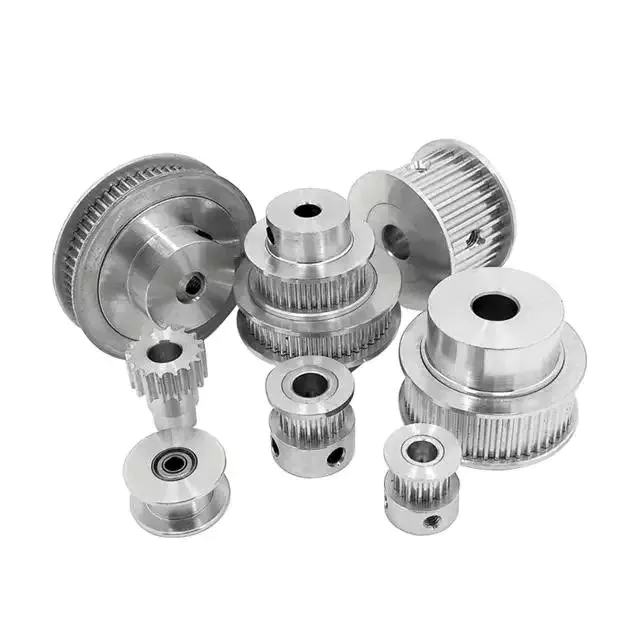
composite pulley
A composite pulley is a mechanical system where 2 or more pulleys and ropes are connected together. It reduces the force required to lift the load because the force is divided by the distance of each pulley. Distance is equal to the mass of the object. Composite pulleys are a common mechanical system on sailboats. Composite pulleys can be used to lift heavy equipment such as sails.
The compound pulley unit consists of 2 pulleys, 1 fixed and the other movable. The fixed pulley is fixed overhead, while the movable pulley is connected to the load by a chain. The lift applies force to the other end of the rope. Anchor points are attached to fixed joists, ceiling joists or sturdy branches. The chain should be long enough to support the load during lifting.
Composite pulleys can be made from a variety of materials. Some are fixed and remain fixed. Others are detachable. The composite pulley combines the advantages of both types, making it a versatile tool. In the table below, these 3 types of pulleys are compared. It’s easy to see which 1 is best for your needs. The right choice depends on your specific needs and budget.
The compound pulley system consists of 2 fixed pulleys and 1 movable pulley. The compound pulley system multiplies the force by a factor of 2. The compound pulley system is particularly suitable for heavy loads and is ideal for construction sites. Workers apply less than half the load force on the composite pulley, significantly reducing the force required. This is a major benefit for many people.
Fixed pulley
Fixed pulleys are fixed gears of fixed length that are mounted on solid objects. There are many different types of pulley systems. Some cooperate with each other, but not “fixed”.
Fixed pulleys can be used for a variety of purposes. One application is to lift small objects. They have a one-to-1 mechanical advantage. Often, a single pulley can lift small loads. The force required to lift a single fixed pulley remains the same. They are usually used to lift lighter objects. They can even be attached to buckets used to draw water from wells.
While single fixed pulleys have desirable mechanical advantages, they are not suitable for force multipliers. Because their mechanical advantage diminishes over time, they are not effective force multipliers. They are used to redirect work so that it can be applied in the most convenient direction. This mechanical advantage is the main advantage of fixed pulleys and the most common way of moving objects. They have several benefits, including the ability to increase the speed of moving objects.
Another application for fixed pulleys is lifting supplies. A scaffold can weigh more than 1 and can be directly hoisted. In order to facilitate the transportation of materials, fixed pulleys are usually installed on the top of the scaffolding on construction sites. Then thread the rope through the edge of the groove that holds the pulley. The fixed pulley exerts the same force on the pull side as on the push side. The same is true for moving objects with fixed pulleys.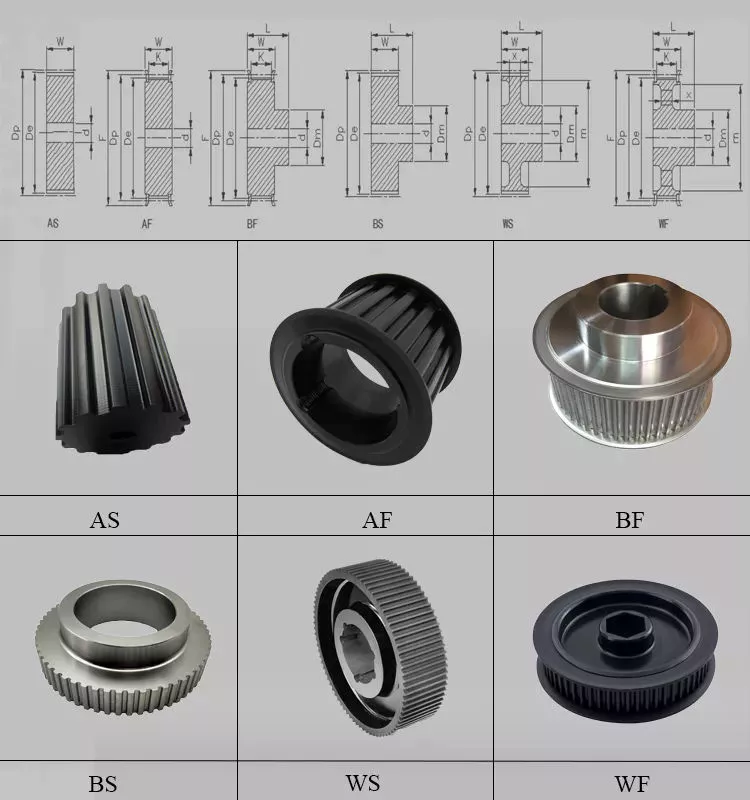
moving pulley
A movable pulley is a device whose part is fixed to another object, usually a rod or beam. The movable part moves with the load, making the load feel lighter. This is a useful tool for those who need to carry heavy items such as large bags. The advantages of moving pulleys are many. Here are some of them. Read on to learn more about them.
One of the most common uses of movable pulley systems is climbing high objects. Climbers act as pulley loads and pull ropes to lift objects. Eventually, when the traction stops, the climber descends. However, it is still a useful tool in other situations. The movable pulley system can help you climb the tallest objects or lift them to level surfaces.
Another example of movable pulleys is in industry. Depending on the load, movable pulleys make handling and moving loads easier. You can use them in a variety of applications in manufacturing and industry, including cleaning. For example, the American flag is raised and lowered every day. Removable pulleys are a handy tool when buildings need cleaning.
If you’re not sure whether a task requires a pulley, a zipline might be a good option. Connect the 2 ends of the rope and the pulley will move along the rope, then attach the rope to the metal cable. The load is the person holding the pulley, and the force comes from the attachment on the other end of the rope. There are 2 types of live pulleys: simple pulleys with just 1 wheel and live pulleys with many ropes attached.
School flag raised with simple pulleys
How is the school flag raised? It is pulled up by a rope attached to a pulley at the top of the pole. When the rope is pulled, the pulley turns, raising the flag. A pulley is a simple mechanism that helps people move heavier objects with ease. The rope must be securely attached to the pulley to keep the flag stable.
A simple pulley is a spinning wheel with grooves on 1 side and ropes on the other. The rope can be any length and the wheels can be any size. The rope has to go through the groove and the load is attached to the other end of the rope. Simple pulleys are pulleys with fixed shafts. An example is the wheel on a school flagpole.
A simple pulley system consists of a primary pole, a secondary pole and an outer member. The primary flagpole is connected to the track by a detour, while the secondary flagpole is connected to the track by a pipe. There is a groove on 1 side of the track, which passes through the inner cavity of the flagpole. An open track at the upper end of the track connects the 2 parts of the pulley.
A simple pulley can be used for many purposes. This is a useful machine that can be used to raise the flag. Among other things, it can be used in clothing lines, bird feeders, and even roofers. And, of course, you can use the pulley to raise the flag. Its versatility makes it an essential part of school decor.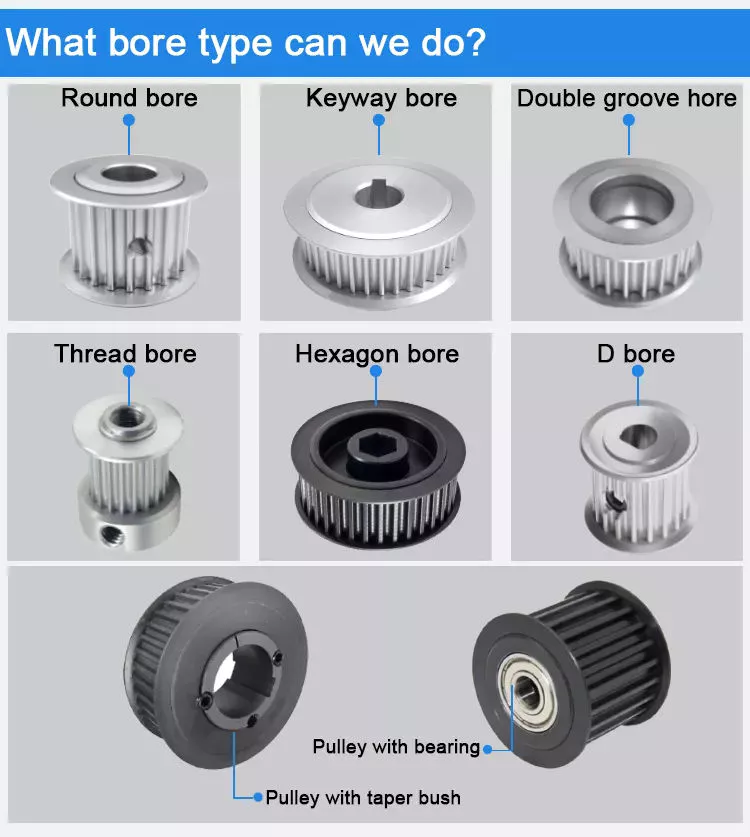
cast iron pulley
If you are looking for pulleys for your machine, you may come across cast iron pulleys. They are usually cheap and available in a variety of sizes. The rim is held in place by a mesh attached to a central boss. The arms and spokes can be straight or curved, but most are oval. There are many uses for this type of pulley.
You might wonder why the arms of cast iron pulleys are so curved. Bent arms tend to yield rather than break. Cast iron pulleys are usually round with a slight bump on the rim, which helps keep the belt centered on the rim as it moves. On a 300mm diameter pulley, the bumps may be as small as 9mm.